Our bee meadow
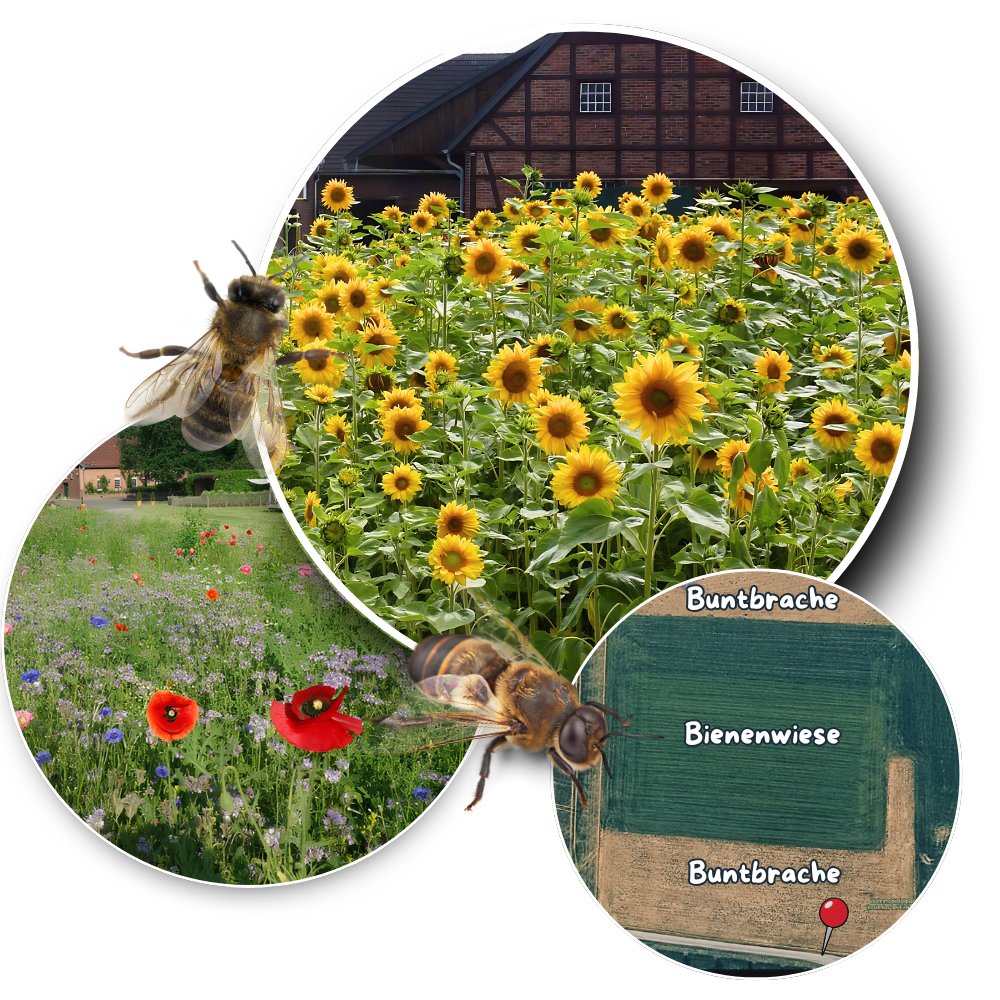
Already a few years ago we started on parts of our courtyard Herbs and various flower mixtures to cultivate for butterflies, bees and other insects, small animals as well as birds and wildlife. When you see how well this is accepted, you start thinking about a lot
Since the calls for Species diversity and biodiversity increasingly in the spotlight
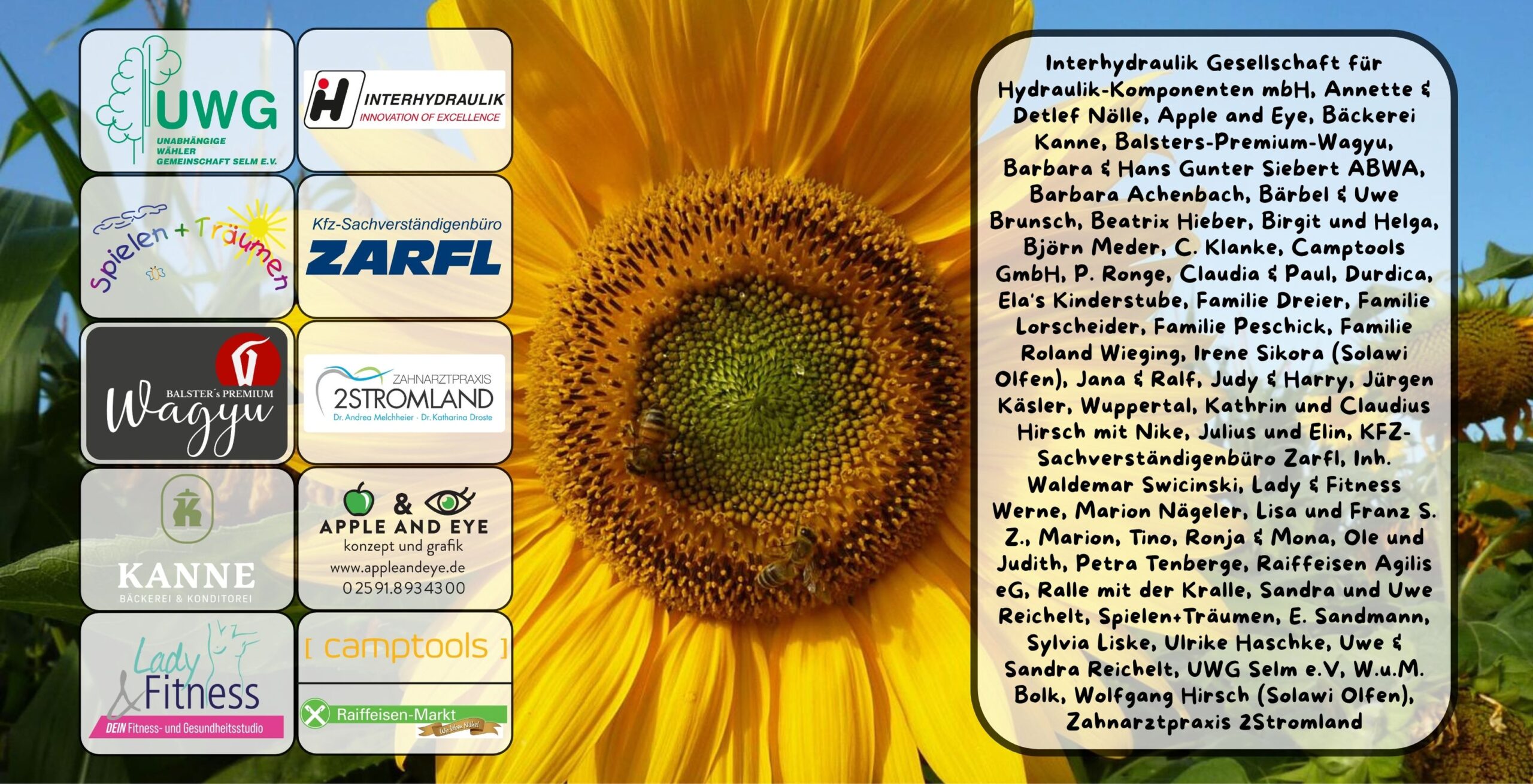
This bee meadow would not exist without the following SPONSORS
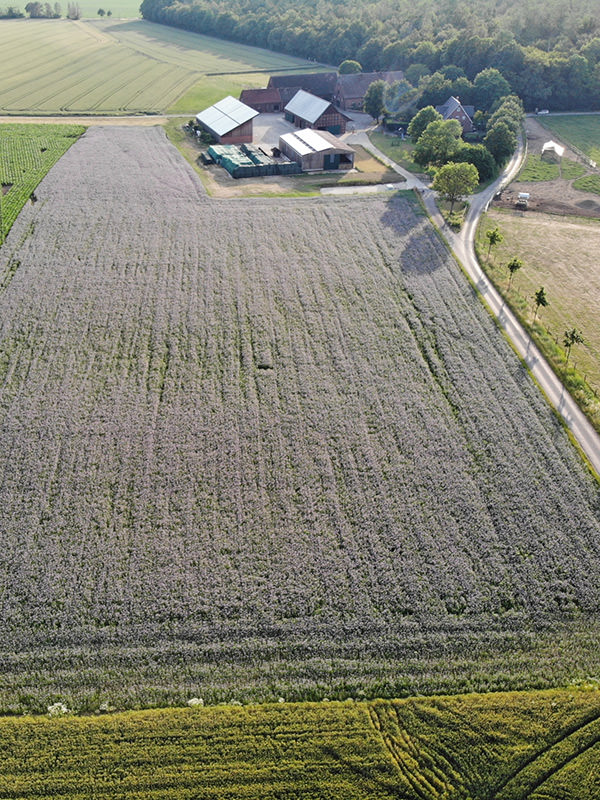
We are therefore prepared, as we have done in the past two years, to convert a portion of our farmland into a Wildflower Meadow to sow for those animals in the spring. For 50€/year let's convert 100 square meters of farmland into an extensive flowering meadow. Of course, during this time no crop protection measures take place and also no fertilizers distributed. We have before sowing the mixture on two different areas. You can as Private individual or, for example, as School class, daycare center, or company a Sponsorship take over.
Since it is meant to be a space for nature,
A Successful Flowering Meadow
In recent years, the campaign has been a great success. Between 125 and 150 sponsorships could be awarded in each case. This resulted in valuable habitats for numerous animal species.
Wild and honeybees, bumblebees, butterflies, hummingbird hawk-moths, and various bird species such as the European goldfinch, blue tit, great tit, and long-tailed tit found and still find an ideal habitat. Even increasingly rare animals such as European hare
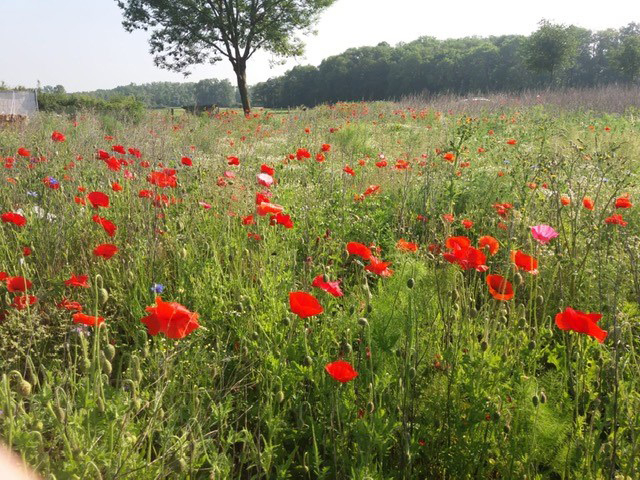
Following that did we have a brand new variant of the wildflower meadow for us as Attempt recognized. We left this wildflower meadow in 2021 untouched. That means, no-till farming, which leads to renewed fuel consumption, no tillage, where microorganisms and earthworms again
But: This area was and is pure natureOf course there was also a nettle in the mix and maybe not every plant from the previous year came back, but – and this is what we are really proud of: we have again wild animals, like we never thought possible again! Back when we were kids, we had about 30 to 40 pheasants just around our farm alone. Over the last few decades, the population dropped to almost zero; maybe you'd spot a single rooster, but offspring? No, there simply weren't any anymore. Whenever there was a clutch of eggs, some predators like the crow would quickly discover it and destroy that precious clutch.
Because we did not till the soil at all and, due to the tall stalks and old plants, we created an incredibly dense shelter were able to offer, birds of prey and crows as well as the fox had a hard time finding animals here across the large area. In addition, the rich food supply offered optimal conditions for the Regeneration of the pheasant population. Estimated 20 pheasants can now be seen around the yard again. In addition, small weasels sighted, many Deer and their fawns. Even a Partridge has been heard. These are animals that can be seen plainly. We can imagine that it will be similar with the insect population. Therefore, we are really glad that for many areas it apparently is not too late yet!
New sponsorship for the bee meadow 2026
Where and how has the area been cultivated or newly created? As one or the other sponsor may have seen, our bee meadow looks different every year. In the first year (2019) hatten wir optimale Aussaatbedingungen für unsere bunte, einheimische Blühfläche.
Wir hatten auf 1,65 ha eine schöne prächtige bunte Mischung an Pflanzen, die auch zu unterschiedlichen Zeiten geblüht haben. Somit hatten die Insekten und Wildtiere auch über einen langen Zeitraum Nahrung, um sich und ihre Nachkommen zu versorgen.
In the Jahr 2020 haben wir die Fläche erst im Frühjahr bearbeitet, da viele Insekten Ihre Eier in den Pflanzen abgelegt haben. Um diese nicht zu zerstören, wurde wie gesagt der Zeitpunkt möglichst weit ins späte Frühjahr verlegt. Leider fand die Aussaat unter extrem trockenen Bedingungen statt und der erste Regen zum Auflaufen der Saat ließ lange auf sich warten. Dies hatte zur Folge, dass sich der „weiße Gänsefuß“ mit seinen tiefen Wurzeln als heimisches Beikraut durchsetzen konnte. Da er flächendeckend und sehr stark die erste Saat schon in der jungen Phase unterdrückt hat, haben wir die komplette Fläche noch einmal eingesät. Leider nur mit begrenztem Erfolg, da das Samenpotenzial stark im Boden verbreitet ist. So ist auch die zweite Aussaat mit fast 60 verschiedenen Pflanzen nicht so geglückt, wie erhofft. Zumindest nicht auf den ersten Blick. Nichts desto trotz, auch diese Pflanze zieht Nährstoffe aus dem Boden und bietet vor allem Fasanen, Feldhasen, Rehen usw. Deckung gegenüber Greifvögeln aus der Luft. Zudem haben wir festgestellt, dass der „weiße Gänsefuß“ nur dort gewachsen ist, wo der Boden bearbeitet wurde.
Gutschein für die Bienenwiese
Wir würden uns freuen, wenn Sie unser “Projekt Bienenwiese 2026” unterstützen würden. Natürlich können Sie auch wieder mit unseren Gutscheinen ein Stück Natur verschenken. Wenn Sie, oder Sie mit Ihren Freunden, mit Ihrer Firma, Partei, Kita usw. das Projekt unterstützen wollen, können Sie für nur 50€ 100 m² Ackerfläche in eine Blühwiese umwandeln.
Natürlich darf auch wieder jeder Pate ein Picknick an unserer Blühwiese genießen. Sie können auch als Pate wieder namentlich auf unserem Plakat am Feldrand erwähnt werden und erhalten bei Interesse ein eigenes Zertifikat.
Wenn Sie uns weiterempfehlen, würden wir uns sehr freuen. Theoretisch können wir noch ca. 100 zusätzliche Patenschaften, also ca. 10.000 m² für die Umnutzung von Ackerfläche in eine Blühwiese anbieten.

Anmeldung: BLÜHWIESE Patenschaft „Balsters Bienenwiese 2026“
Bitte überweisen Sie den Betrag für die gewünschte Anzahl an Patenschaften mit dem Verwendungszweck „Bienenwiese 2026“. Unsere Bankverbindung erhalten Sie per E-Mail. Die Zertifikate mailen wir Ihnen nach Geldeingang zu.