Wagyu Steak – The special delight from loving breeding
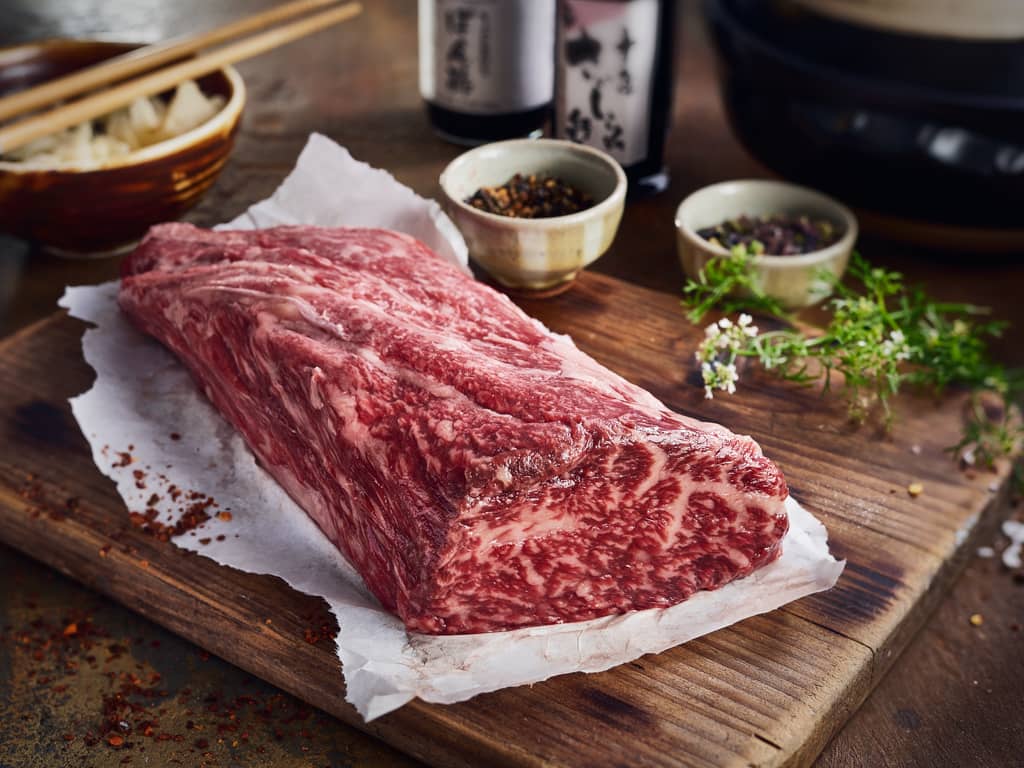
Wagyu steak stands for incomparable quality, excellent marbling, and a unique taste. Our Wagyu steaks come from our own breeding and are processed through stress-free farm slaughter. The variety of different Wagyu meat cuts and cuts of meat leaves nothing to be desired for true meat lovers.
A Wagyu steak is a true highlight for the palate. The fine fat marbling ensures a special tenderness that cannot be found in any other meat. When pan-seared or grilled, the fat literally melts into the meat, giving it a buttery, almost nutty flavor. The unique combination of texture and aromas makes Wagyu steaks an incomparable taste experience that continually delights connoisseurs.
The Diversity of Wagyu Steaks
An Overview of Meat Cuts
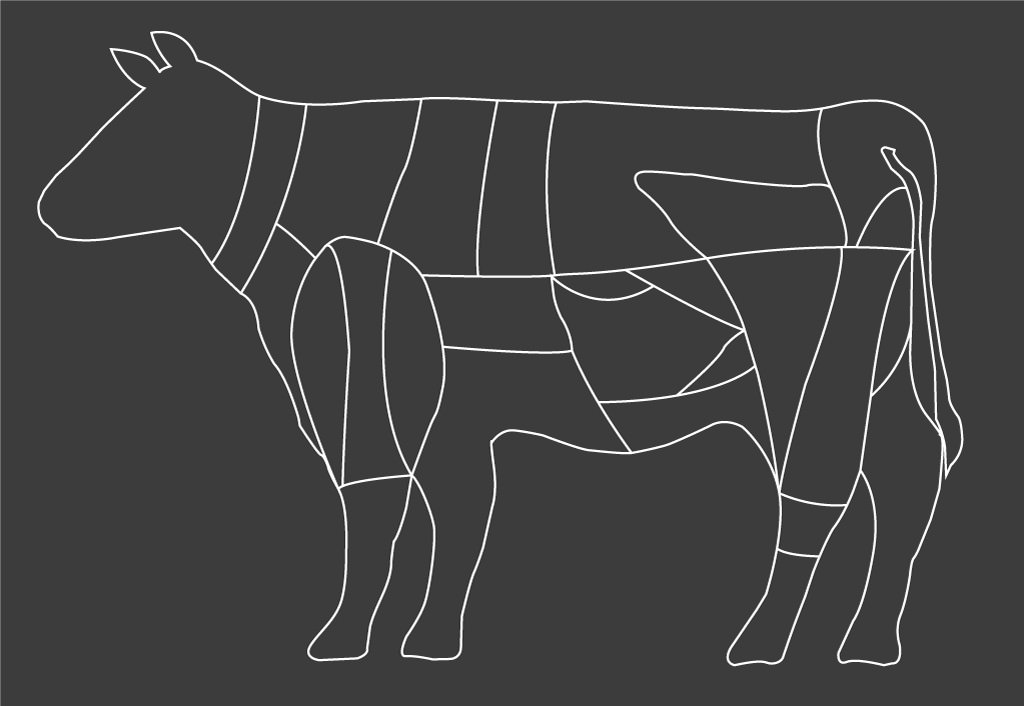
Wagyu beef offers an impressive selection of different cuts, which are characterized by their special texture, marbling, and preparation options. This results in various types of Wagyu steak, as well as tenderloin, sausage, patties, and roasts. Below you will find an overview and preparation recommendations for the most popular Wagyu steaks.
Chuck (Teppanyaki, Denver)
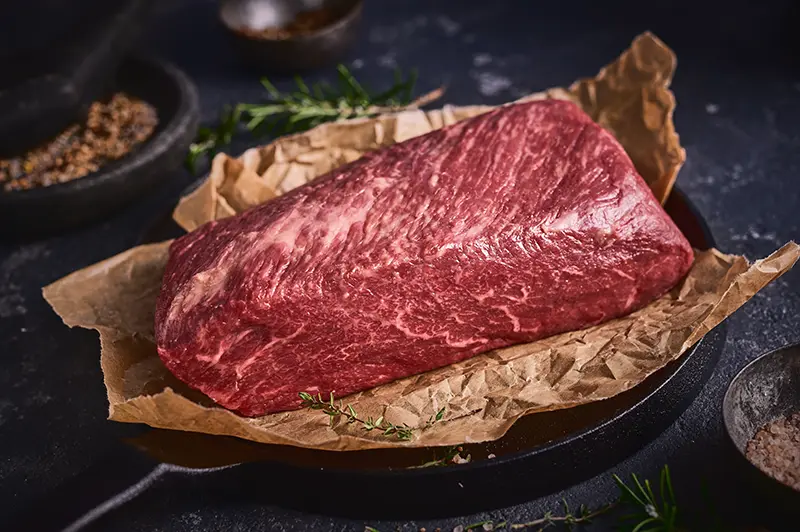
Chuck roast
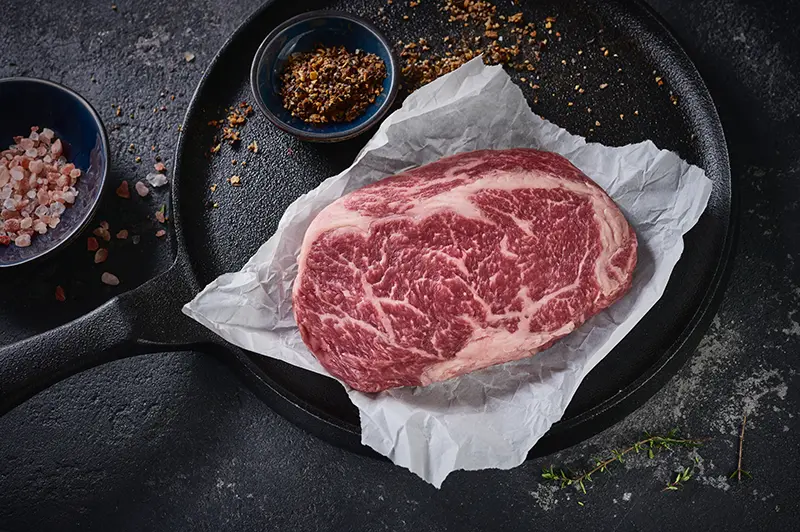
Rib Eye
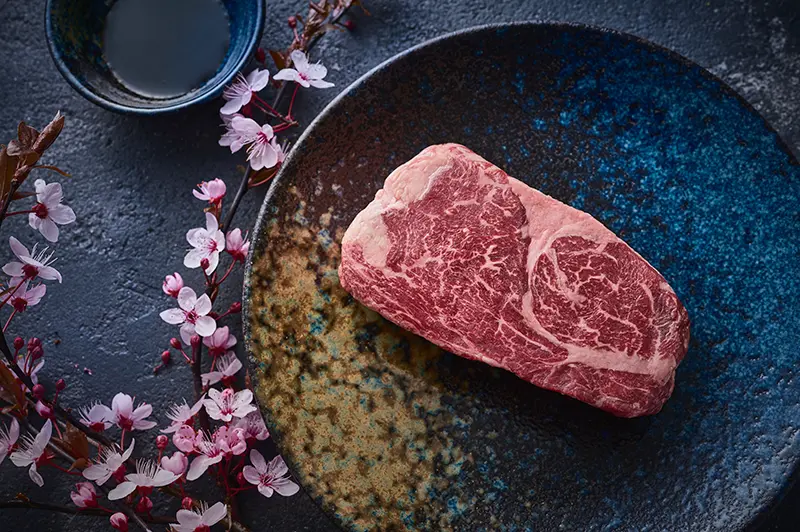
Ribeye Steak
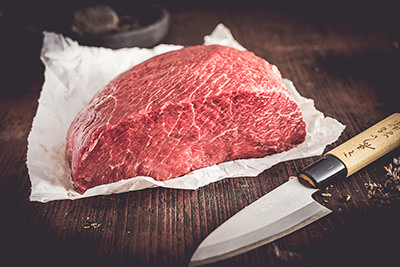
Teres major roast
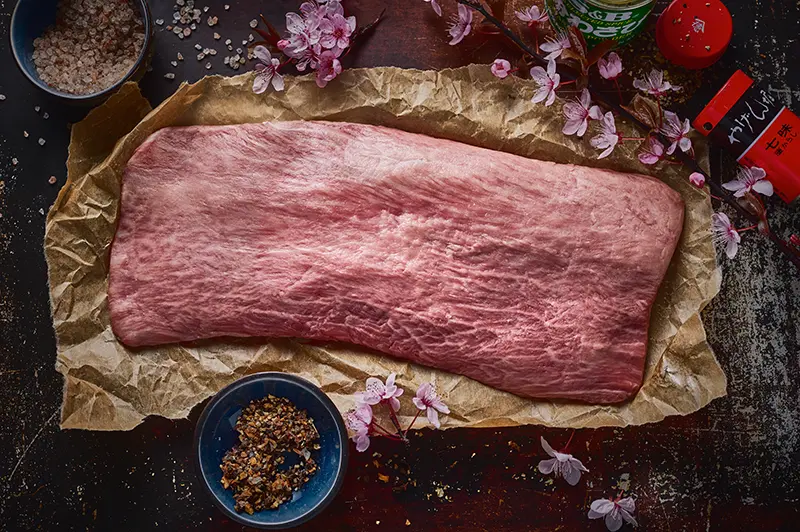
Flat Iron Steak
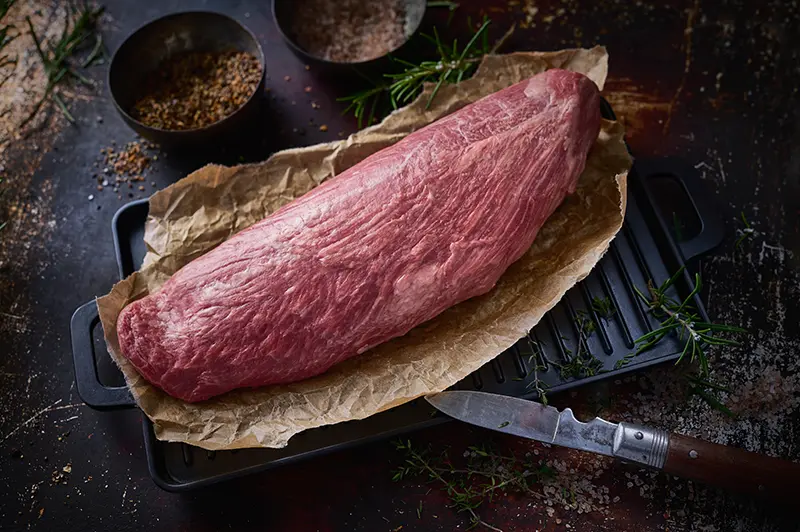
Mock tender
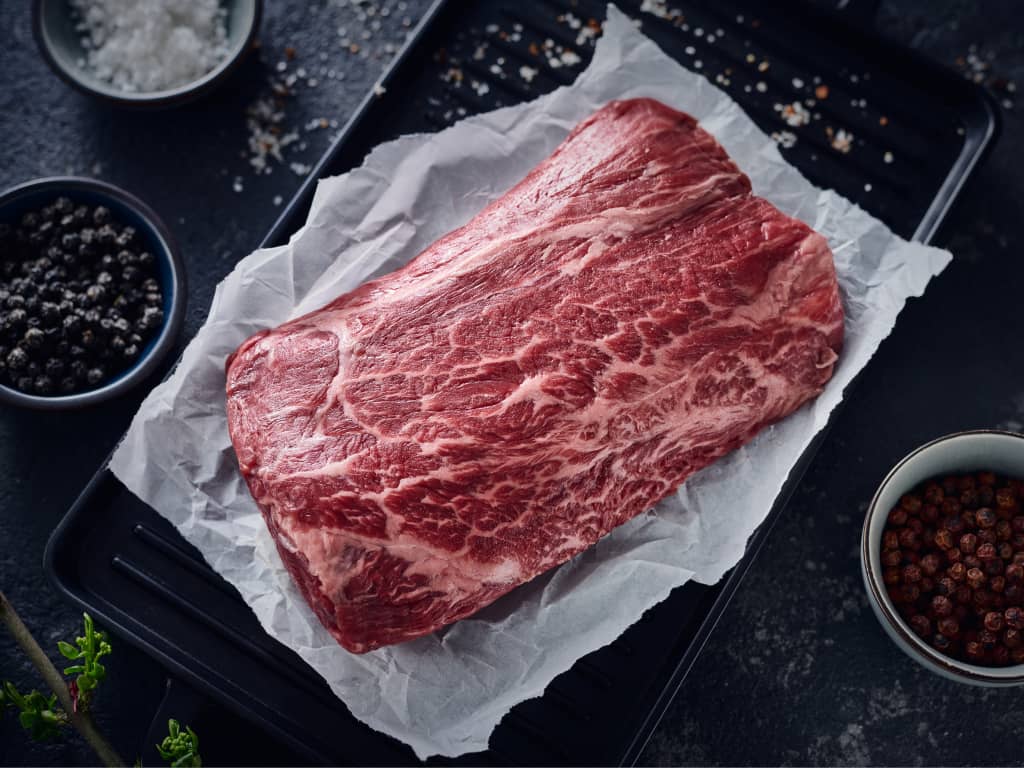
shovel blade
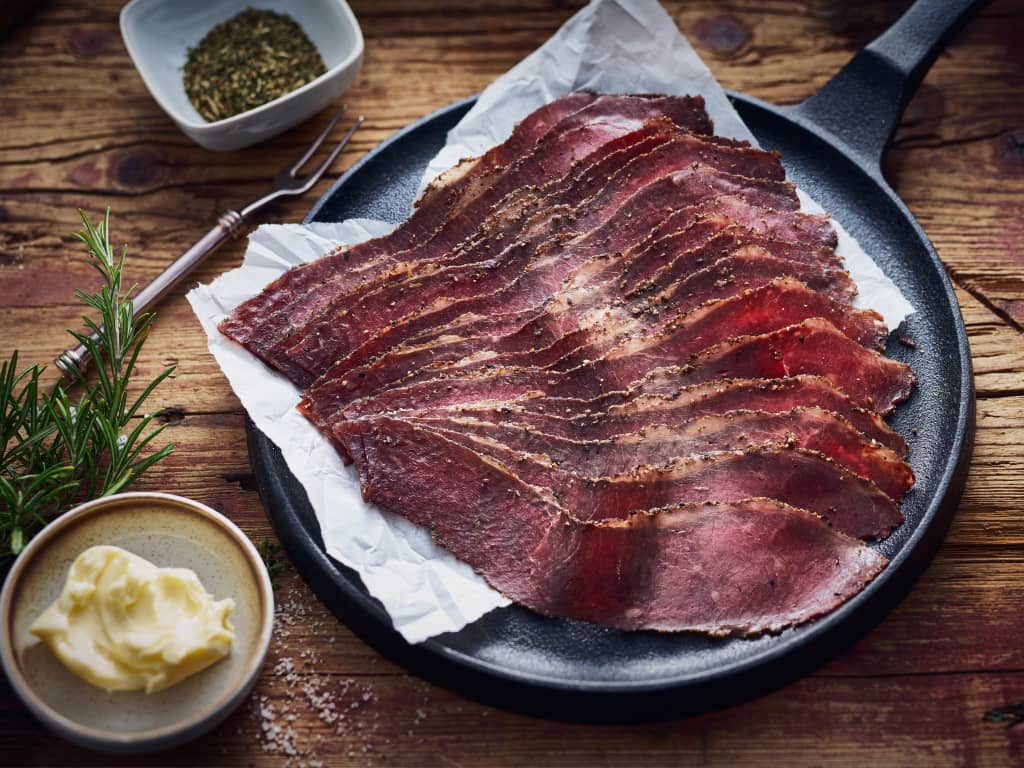
Brisket
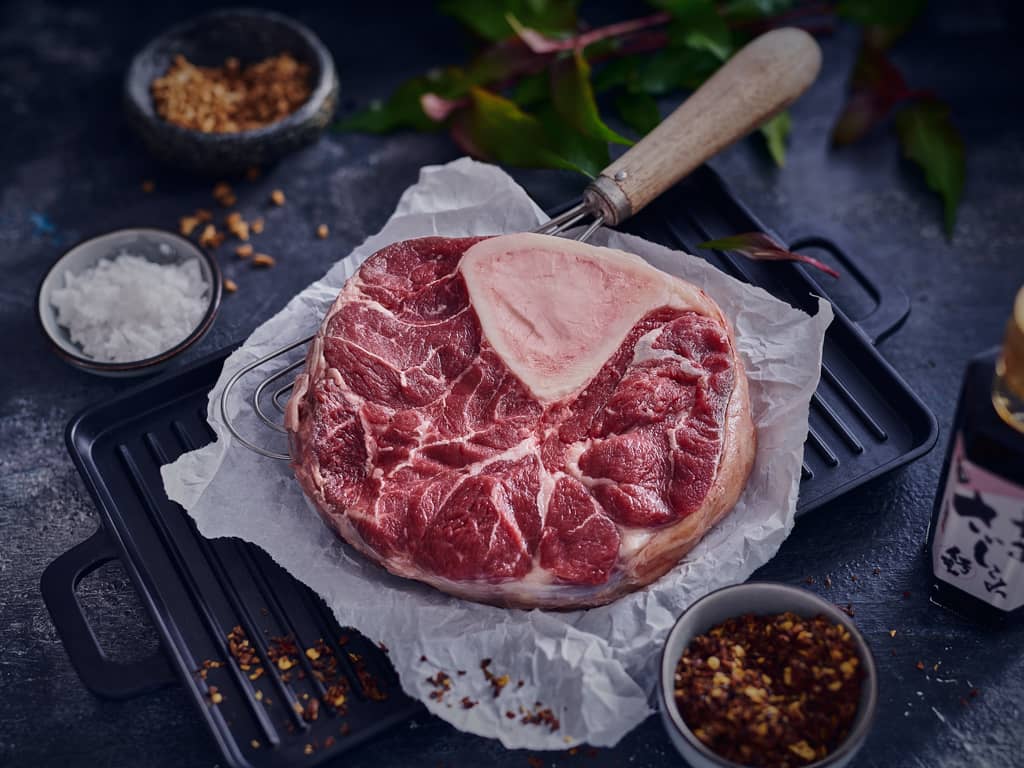
Shin (shank)
Brisket
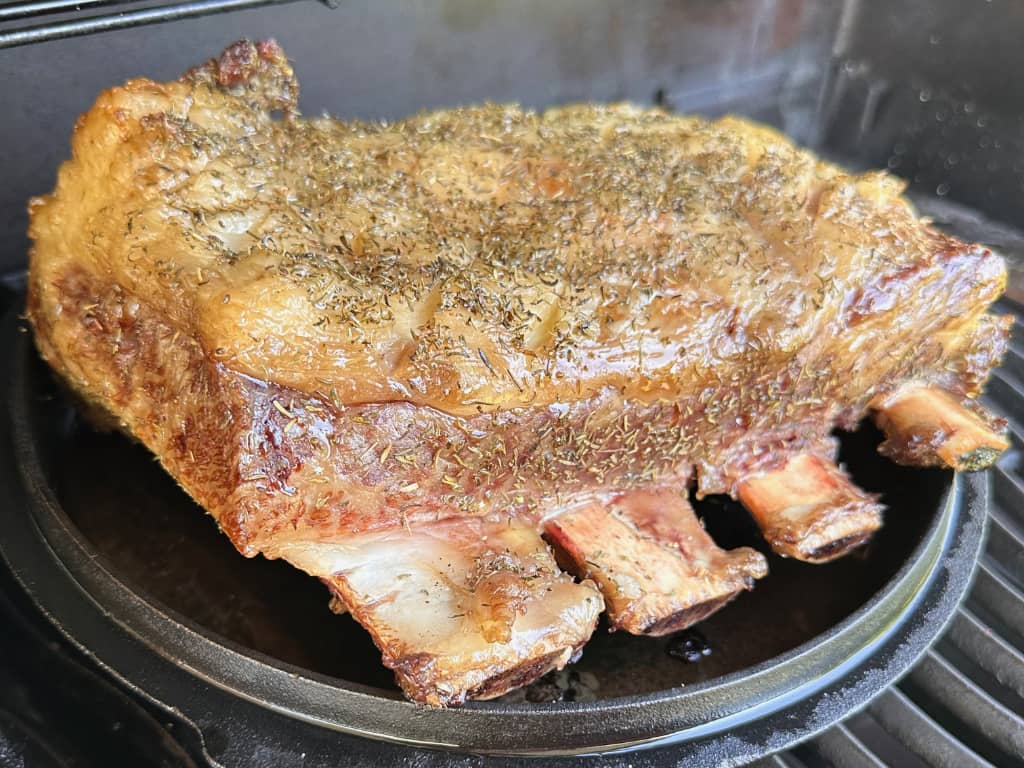
Short Rib
Short Rib
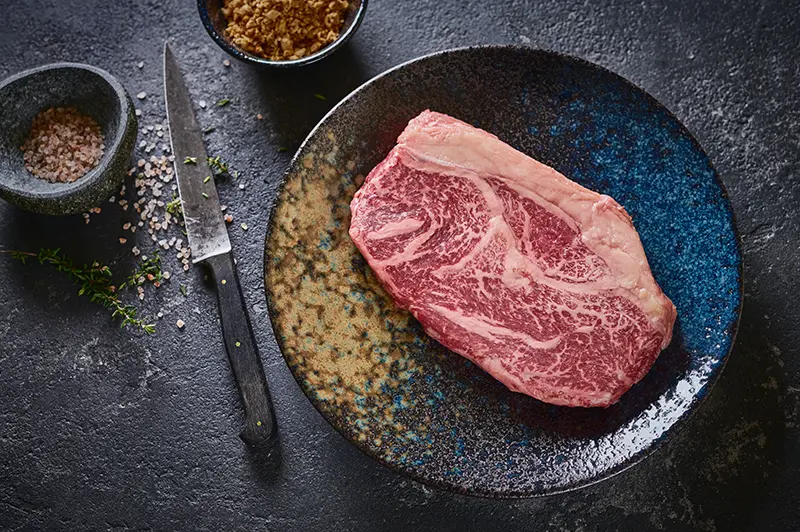
Roast beef / Rump steak
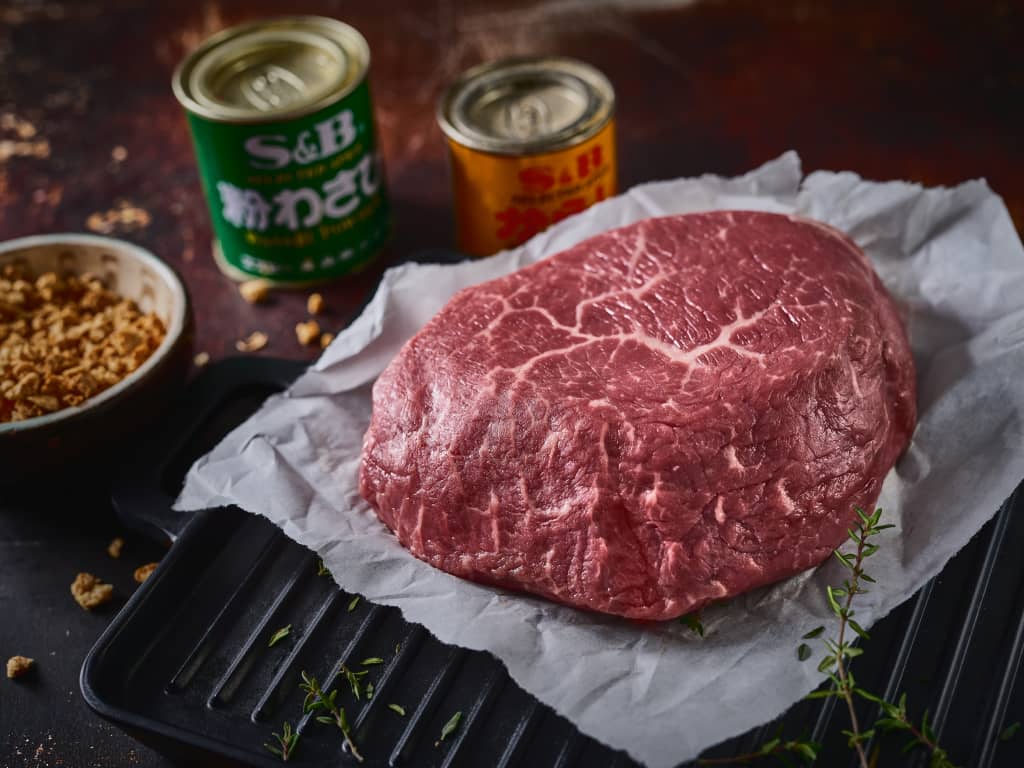
Filet / Tenderloin
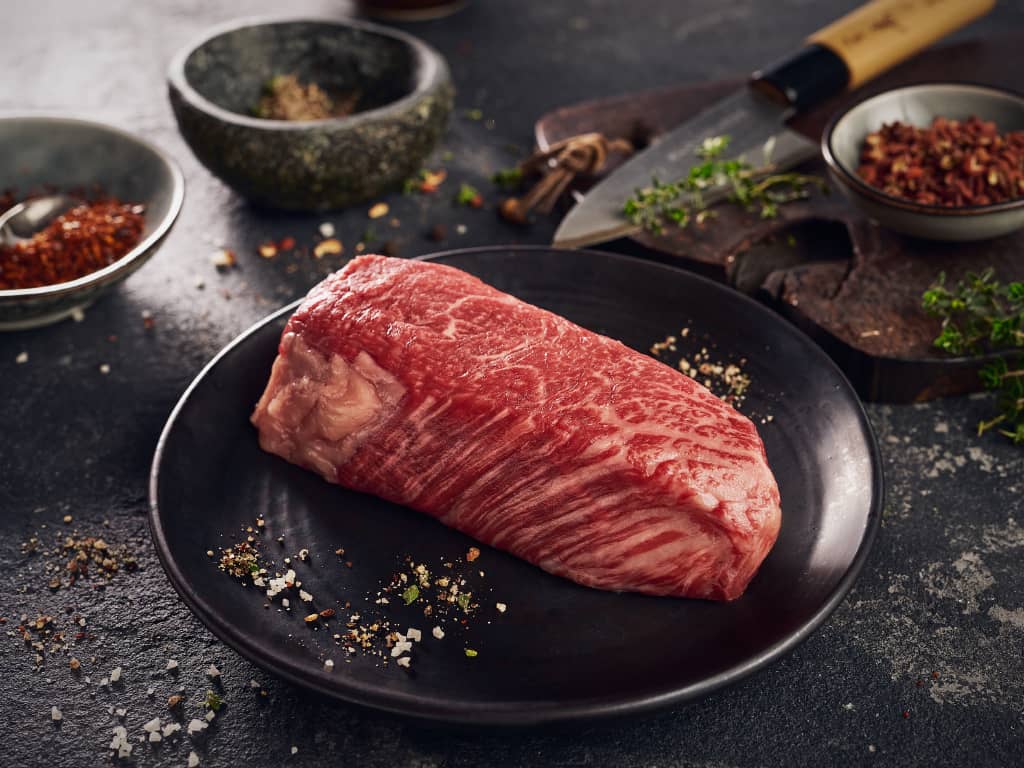
Hip / Sirloin
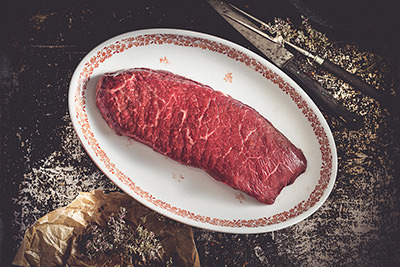
Rump / Sirloin
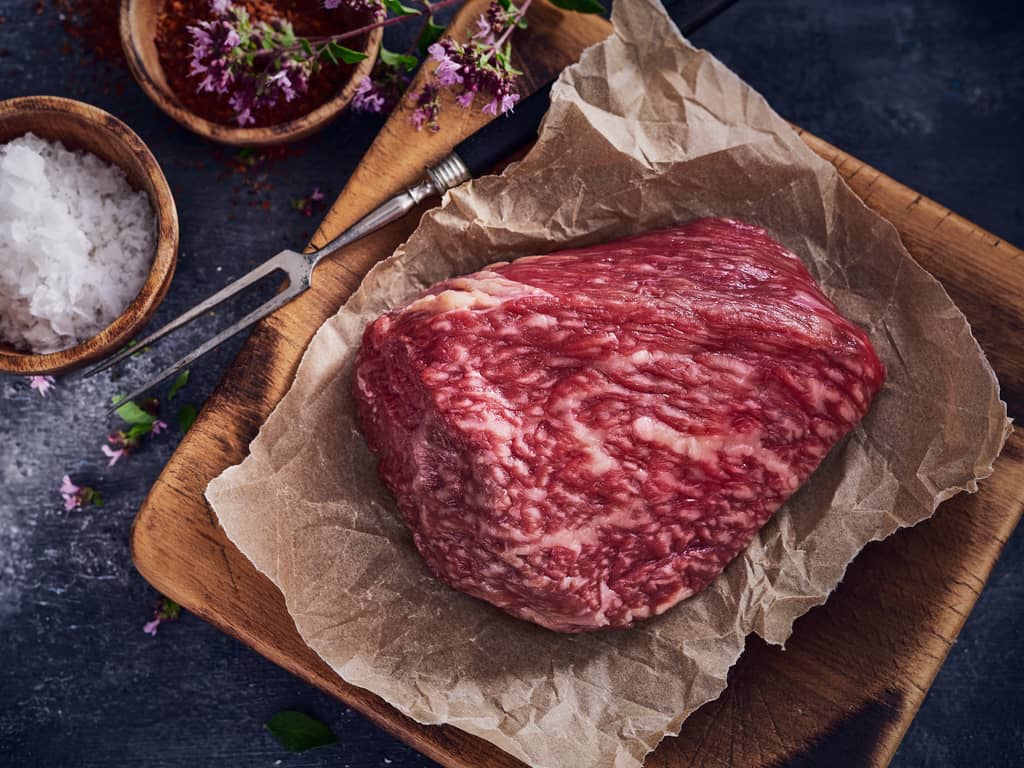
Tri-Tip
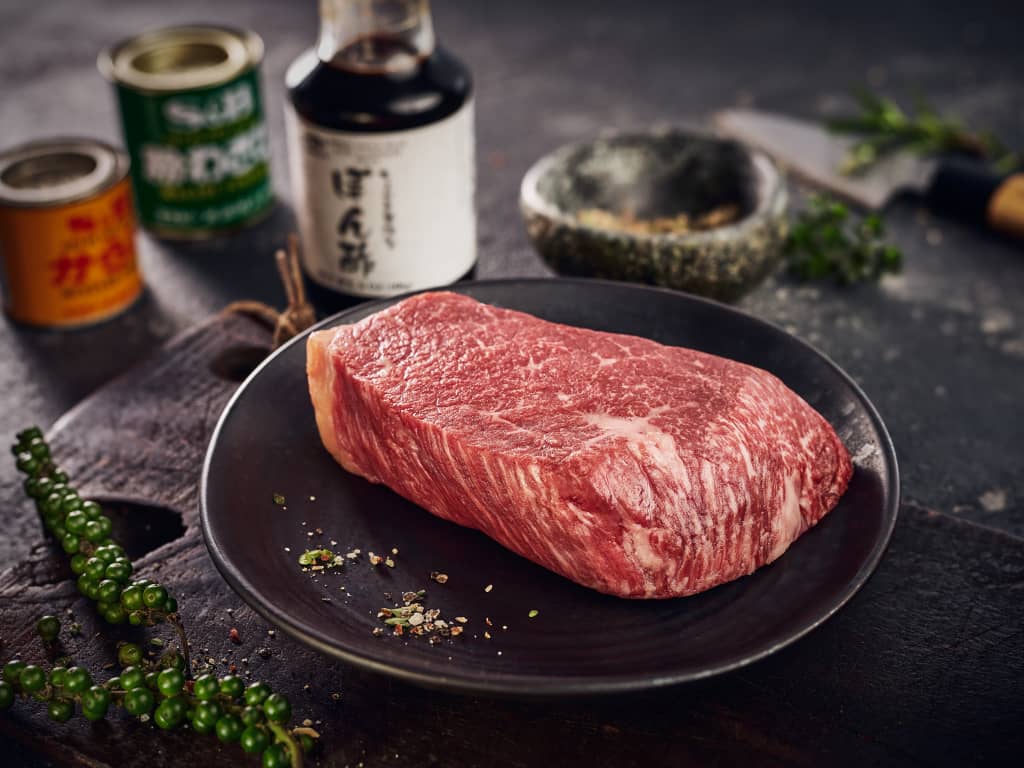
Top round (rump steak, roulade)
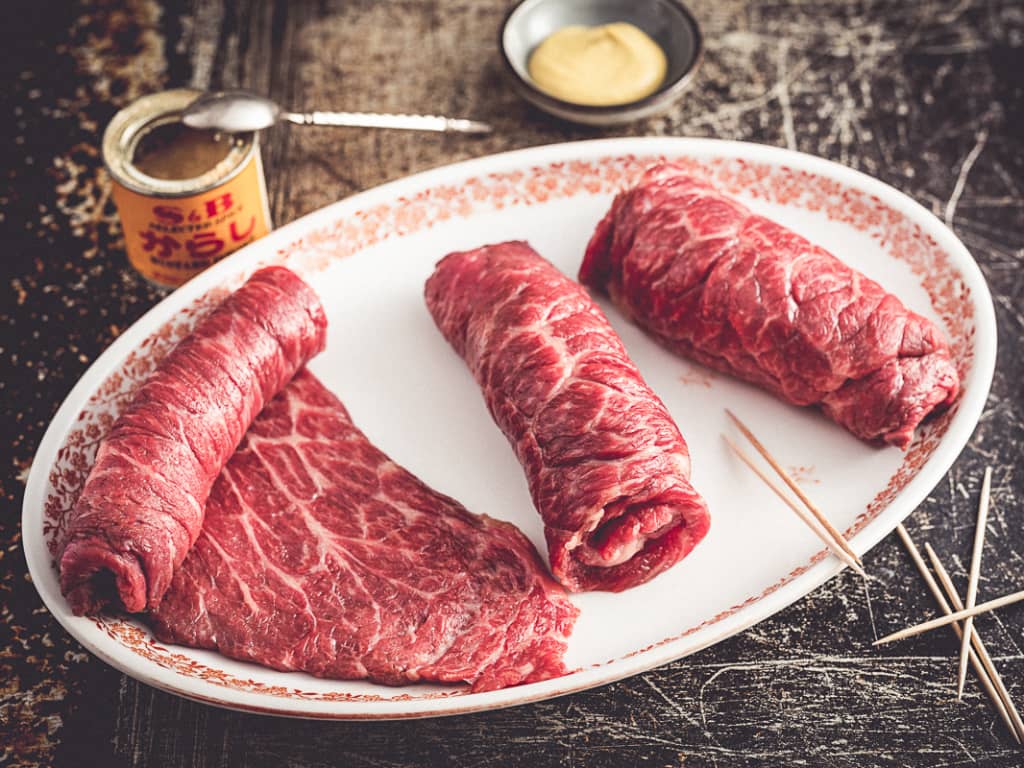
Bottom round
tail roll
Hanger steak
Rump steak
Flank steak
Rump cap / Top side beef
Tongue
Preparing Wagyu Steaks
General preparation of steaks
Frozen steaks should ideally be thawed in the refrigerator a day before preparation. Take the meat about an hour before cooking out so that it can come to room temperature – this ensures even cooking and allows the full flavor to develop.
Wagyu steaks can be both on the Grill as well as in the Pan be prepared. For a perfect result, it is recommended to use a Meat thermometer. Many enthusiasts base their orientation on a Core temperature of about 54 °C for a tender, juicy result – of course, the degree of doneness can be adjusted individually.
After reaching the desired temperature, let the steak rest for about Rest for 5–10 minutes, so that the meat juices can distribute optimally inside. Afterwards, a touch of coarse sea salt is enough to enhance the natural flavor.
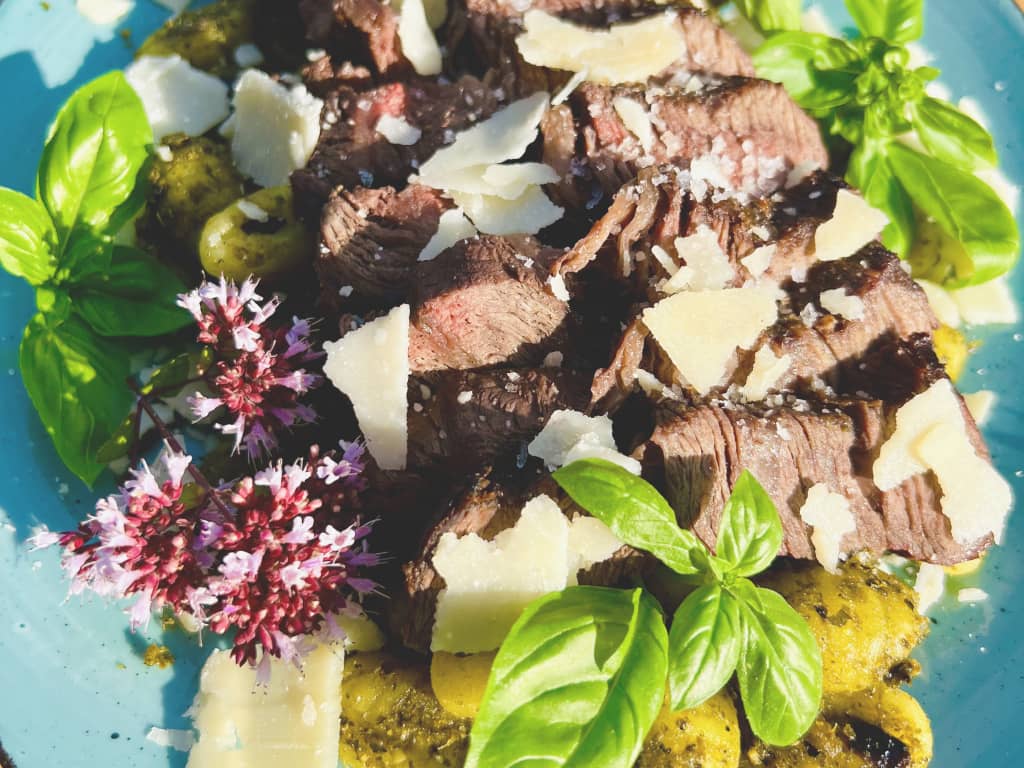
Wagyu steaks are frequently sliced, meaning approximately 0.5 cm thin strips cut. Important: Always cut while doing so cross-grain. This keeps the meat exceptionally tender and a pleasure to eat. It is best to take a look at the grain of the meat while it is still raw in order to determine the correct cutting angle.
We recommend serving with preheated plates, to keep the meat at temperature. Additional spices or sauces are usually not necessary – the delicate, buttery flavor of a true Wagyu steak speaks for itself.
From the neck
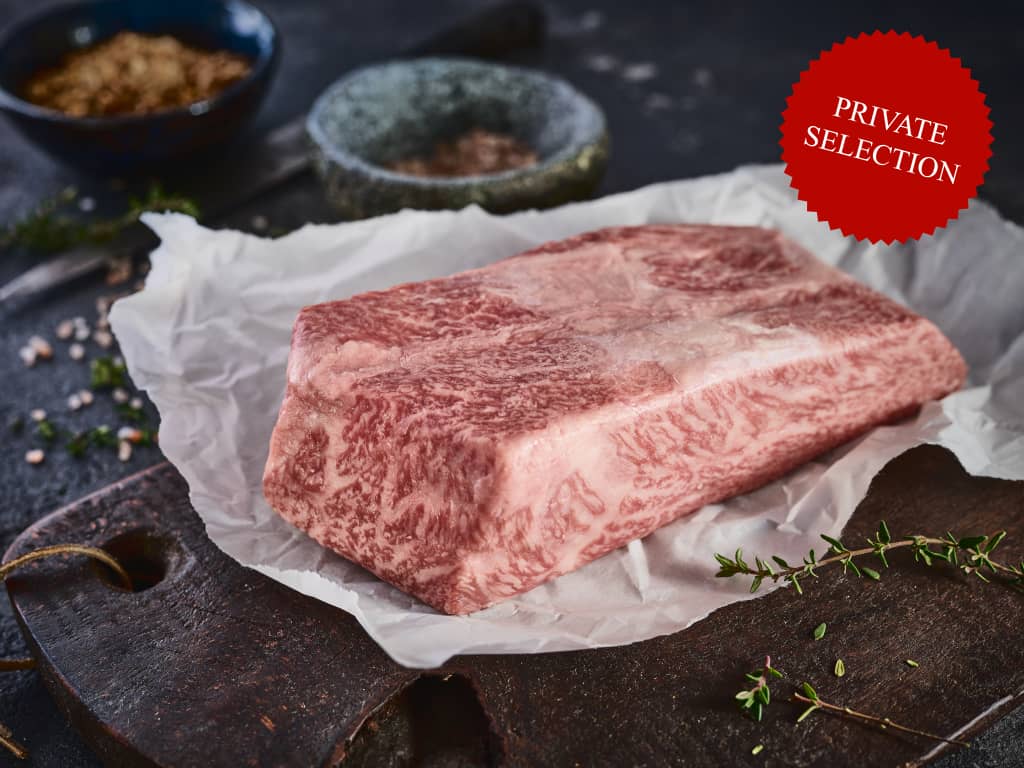
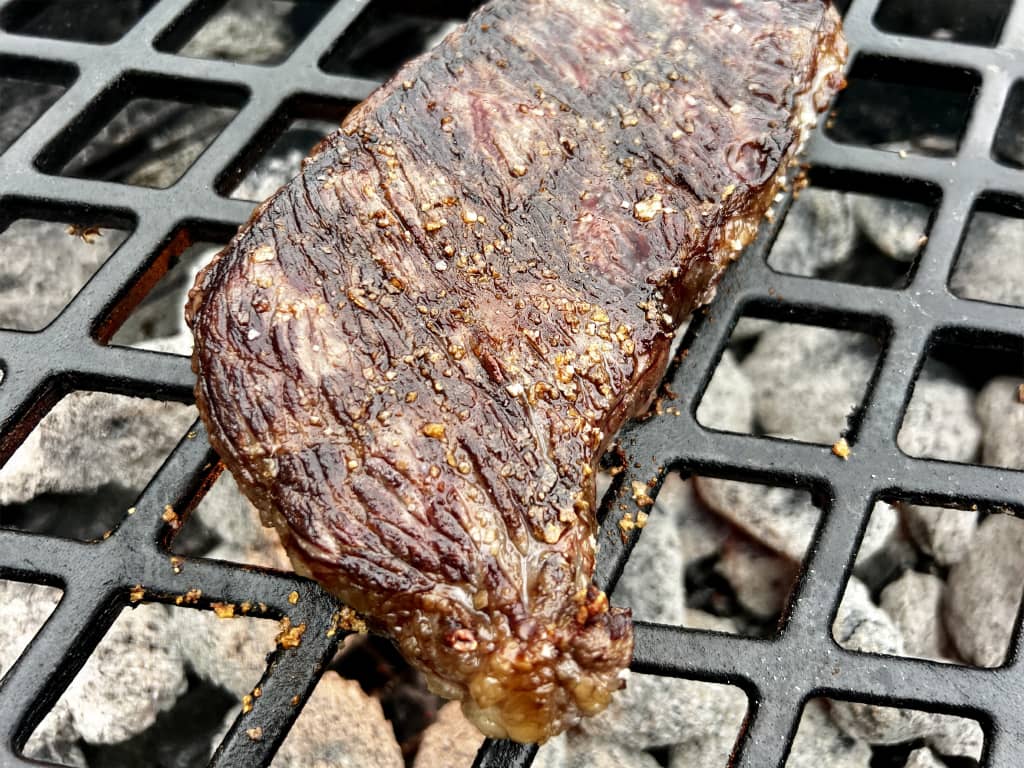
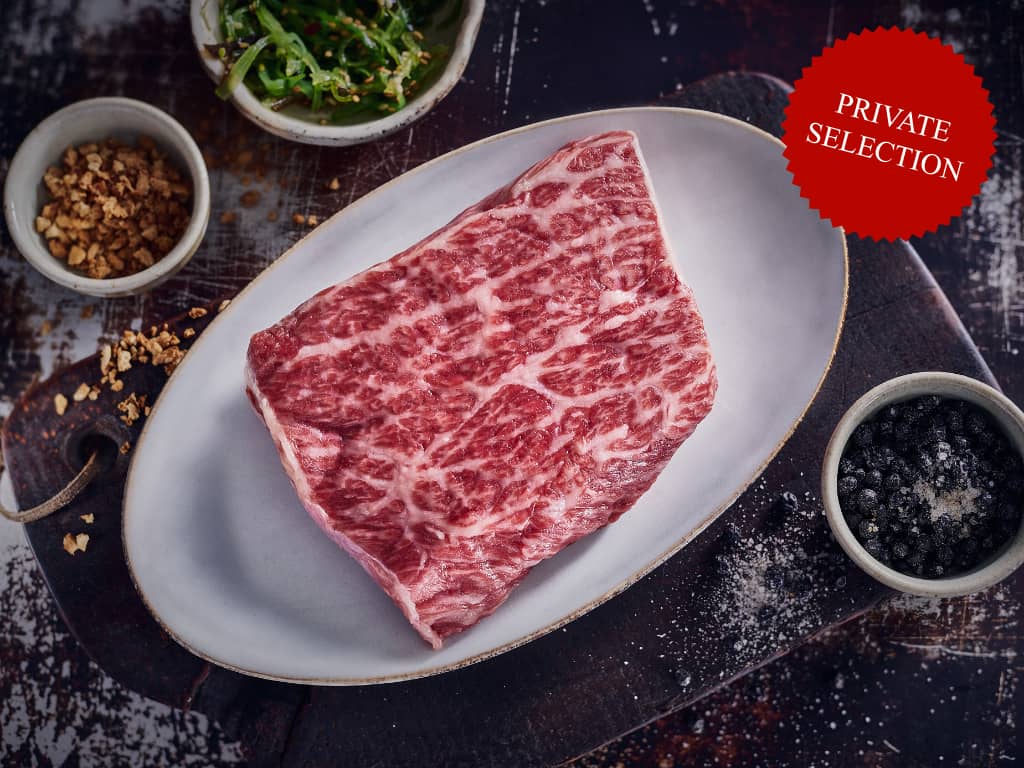
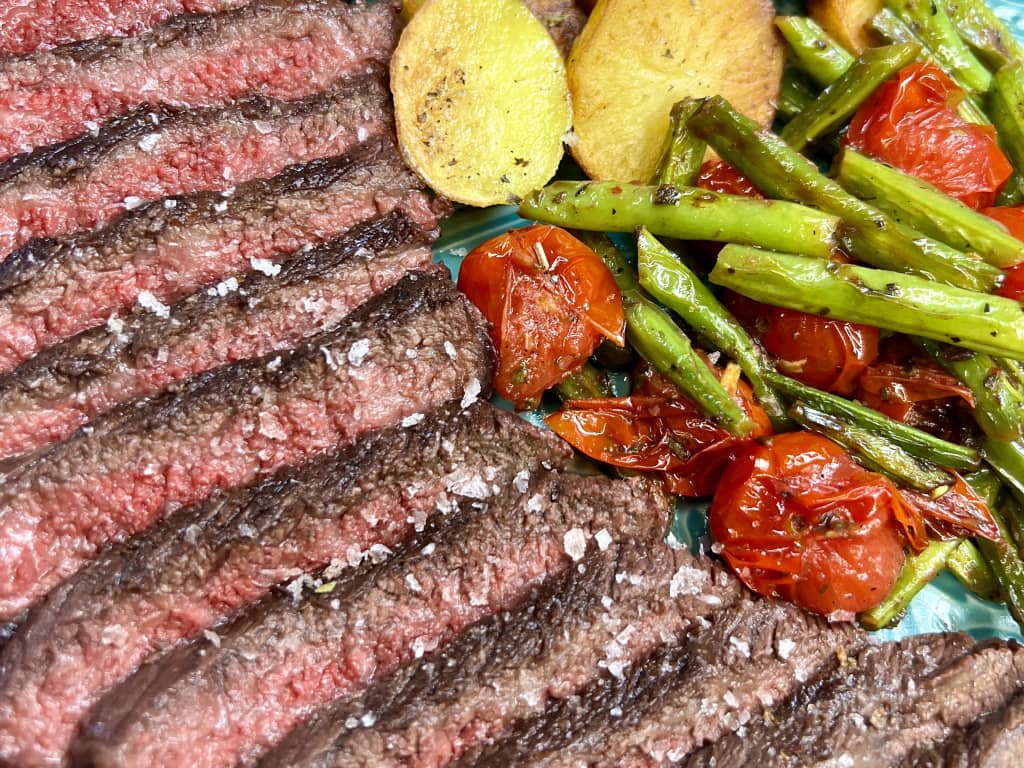
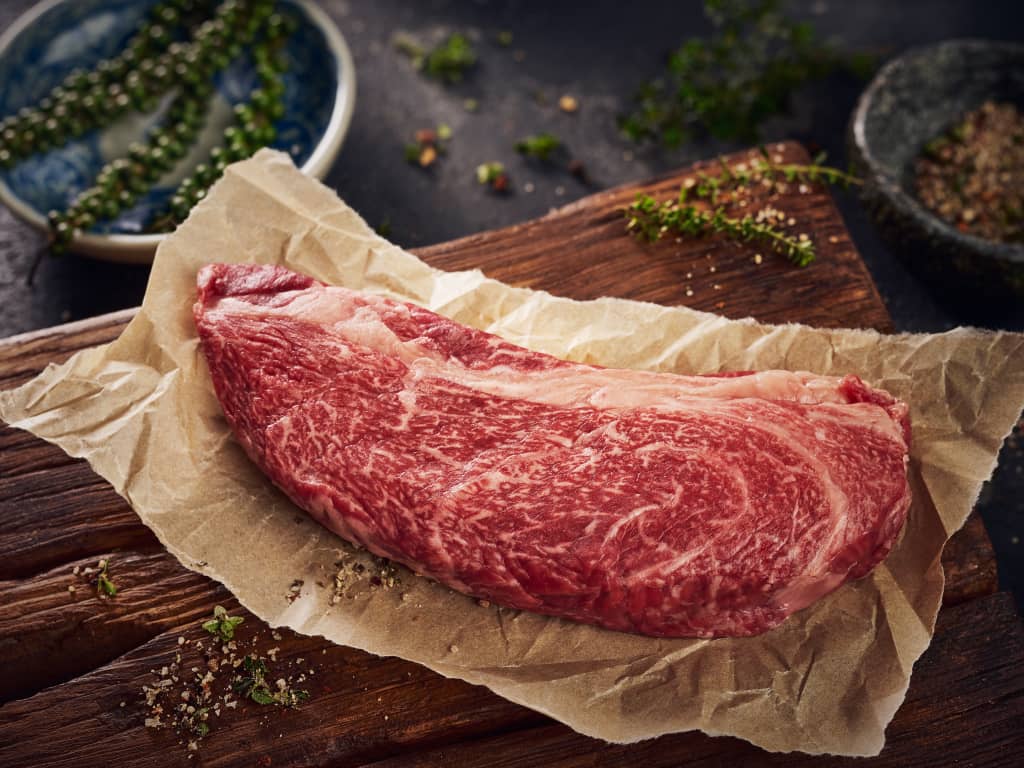
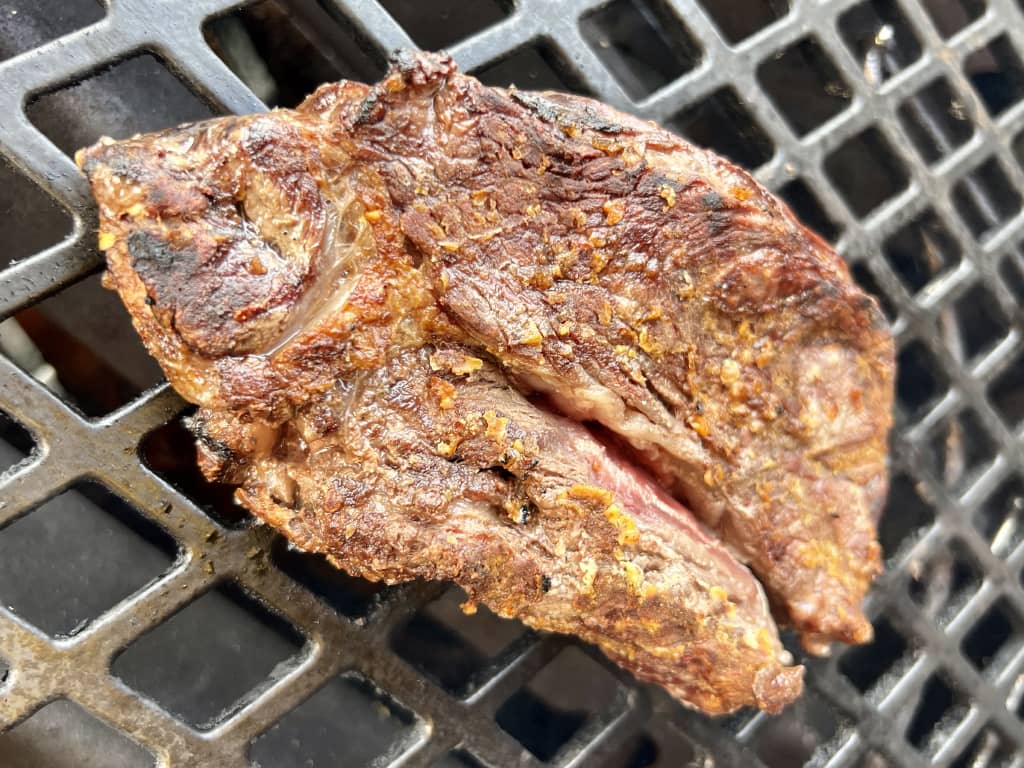
Wagyu Beef Denver Steak
The Denver Steak comes from the lower neck area, which is less exercised. Due to its heavy marbling, it is exceptionally well-suited for pan-searing while remaining particularly juicy.
Preparation recommendation:
Pan-frying / Grilling
Recommended preparation: medium (52-54°C core temperature)
medium-well (60-63°C core temperature)
Sear/grill the steak over high heat for 3 minutes per side. Then finish in the oven or on the grill (indirect zone) at 110°C until the desired internal temperature is reached. Use a meat thermometer for this. Let rest briefly before serving.
IMPORTANT: Slice the steak against the grain. Season with flaky salt and coarse pepper.
Teppanyaki Steak
The Wagyu Teppanyaki Steak is located at the lower neck and is heavily marbled. It is traditionally sliced into thin strips on the teppanyaki grill or prepared classically as a steak.
Preparation recommendation:
Pan-frying / Grilling
Recommended preparation: medium (52-54°C core temperature)
medium-well (60-63°C core temperature)
In the pan or on the grill Sear/grill on both sides over high heat for 2-3 minutes. Then finish in the oven or on the grill (indirect zone) at 80°C until the desired internal temperature is reached. Use a meat thermometer to help with this. Let rest for 2-3 minutes before slicing.
Season with flaky salt and coarse pepper.
From the shoulder
Wagyu Flat Iron Steak
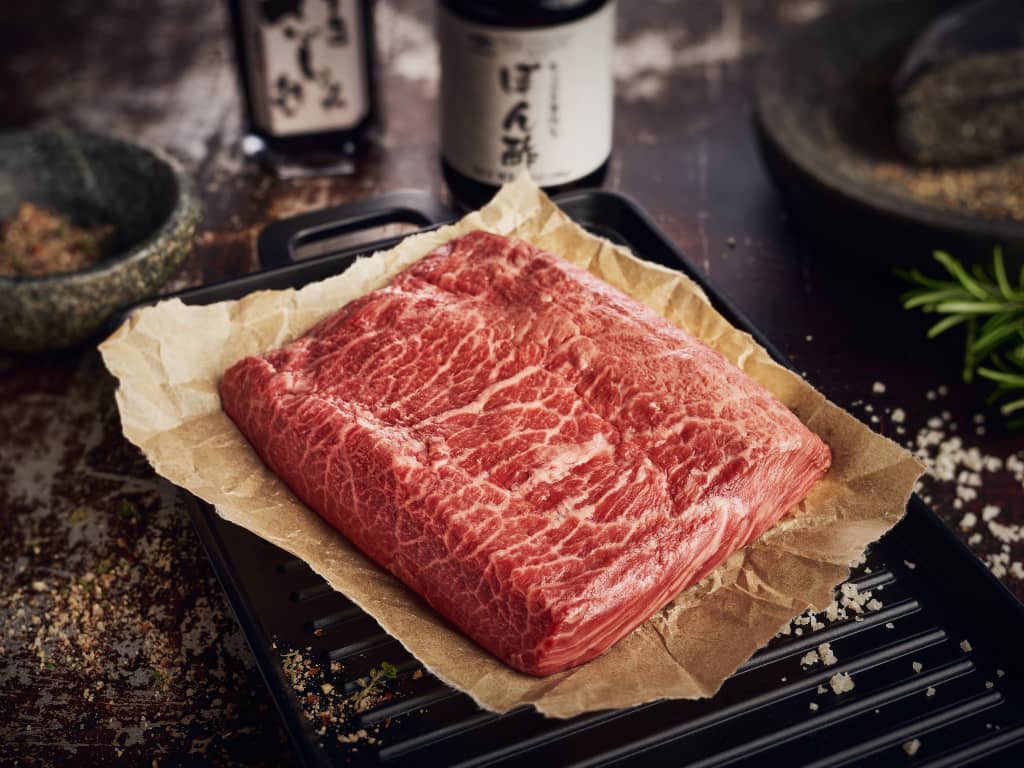
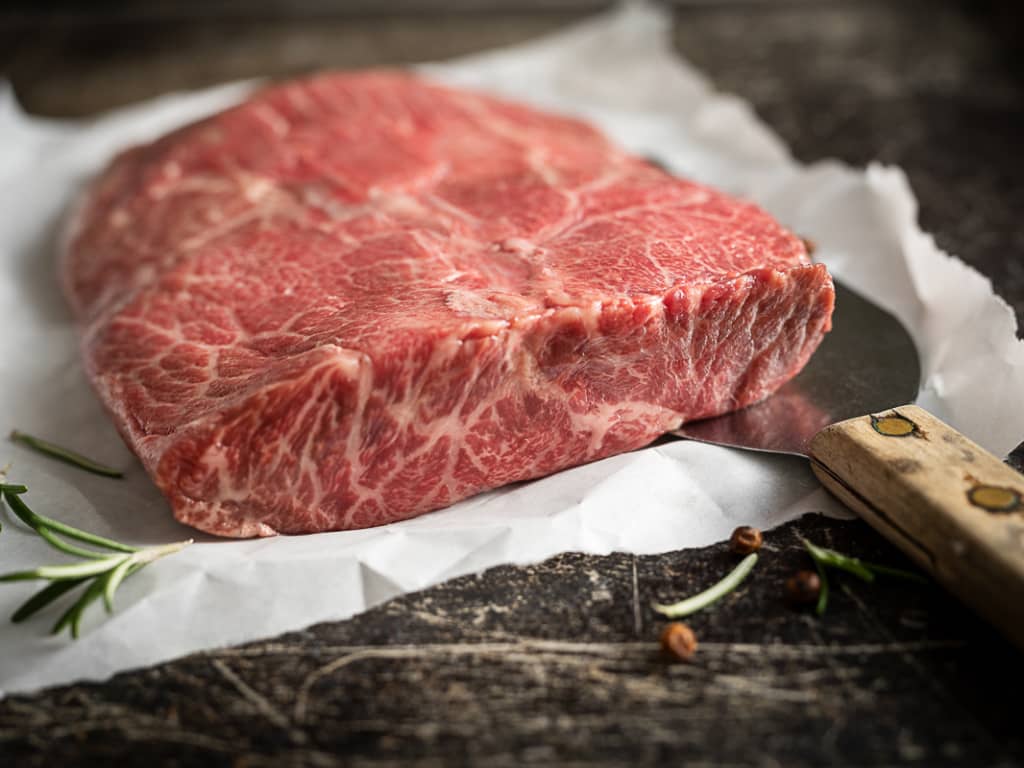
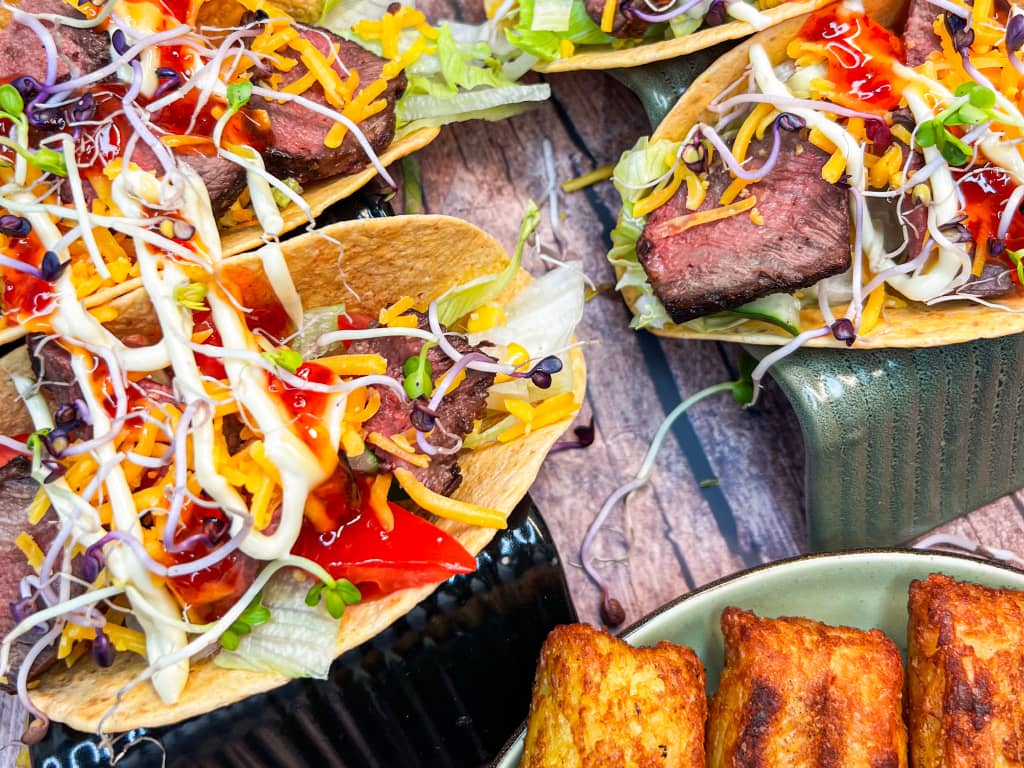
The flat iron steak is cut from the top blade of the Wagyu beef shoulder and, due to its beautiful marbling, is ideally suited for Pan-frying.
Preparation recommendation:
Pan-frying / Grilling
Recommended preparation: medium (52-54°C core temperature)
medium-well (60-63°C core temperature)
Sear the meat on both sides for 2-3 minutes over high heat. Then finish cooking in the oven or on the grill (indirect heat zone) at about 160°C until it reaches an internal temperature of 54°C. Use a meat thermometer to help with this. Afterward, let the steak rest for about 5 minutes. Season with flaky salt and coarse pepper.
Teres Major (Texas style)
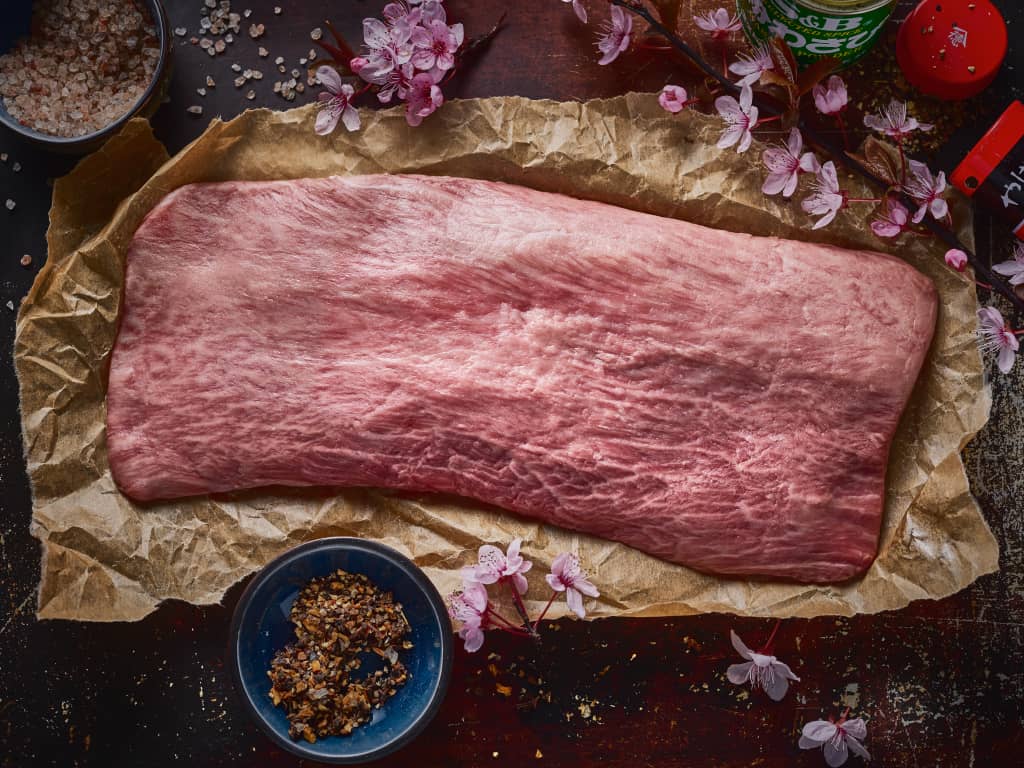
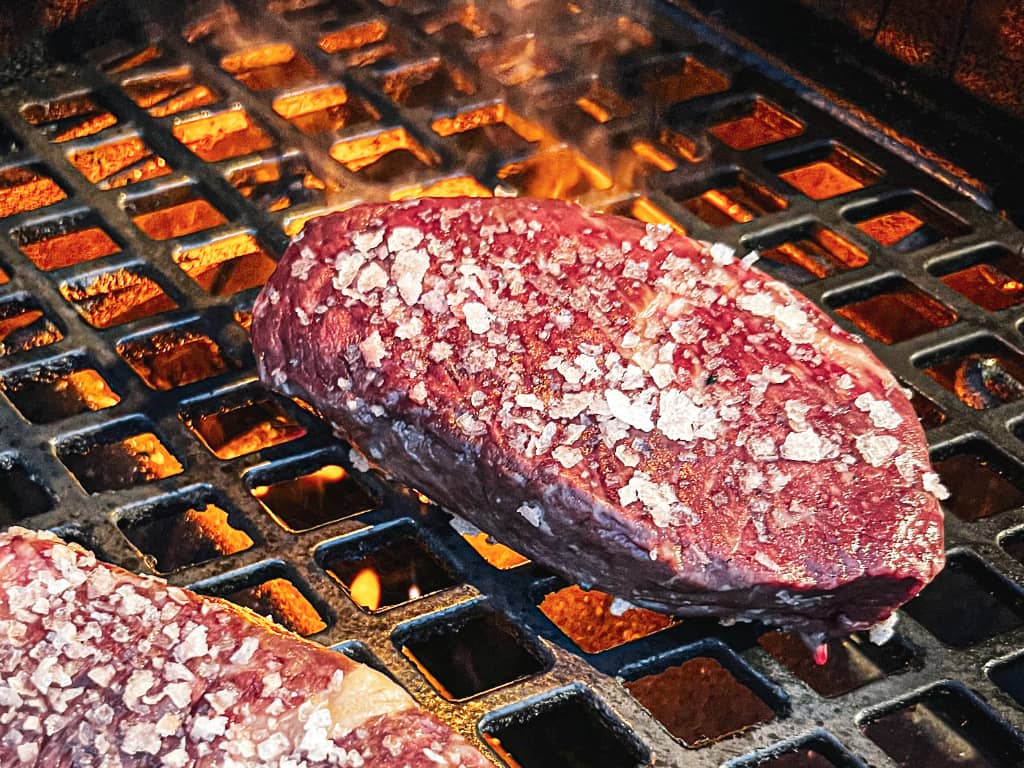
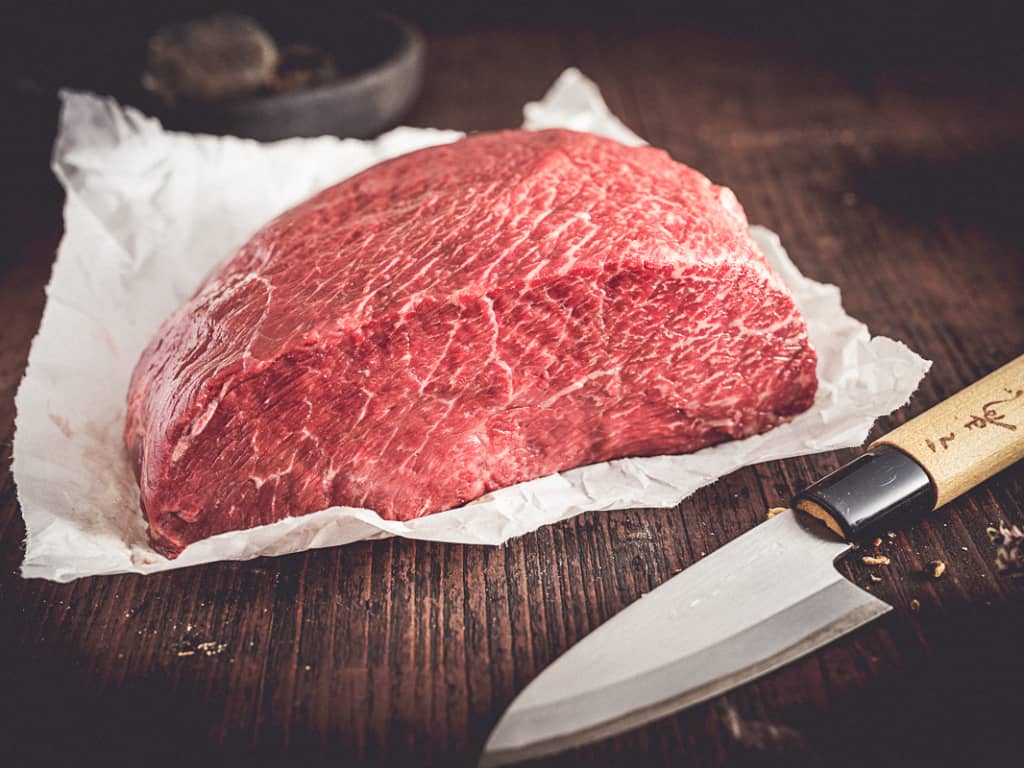
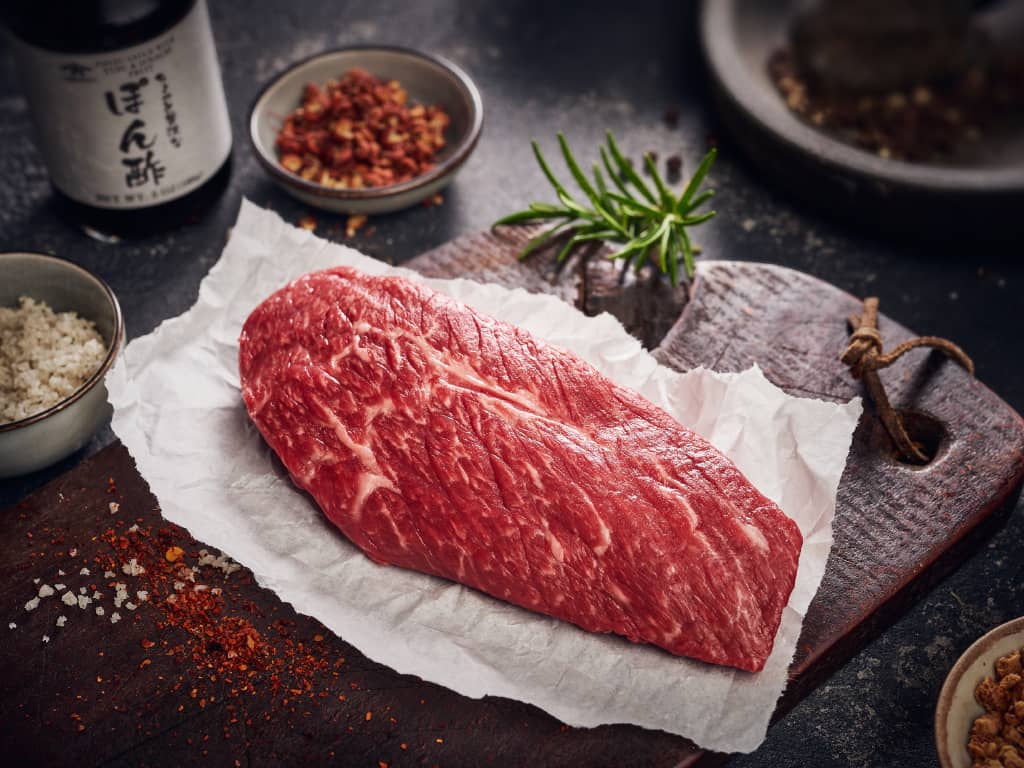
The Wagyu Teres Major comes from the thick flank. The name comes from Latin and means „large round muscle.“ It is of very high quality and therefore also received the name butcher's cut. It is heavily marbled, fine-grained, juicy, tender, and very flavorful. It can be prepared whole or as Wagyu Steaks to be grilled.
Preparation recommendation:
Pan-frying / Grilling
Recommended preparation: medium (52-54°C core temperature)
medium-well (60-63°C core temperature)
Sear or grill in a pan or on the grill over high heat for 2-3 minutes on each side. Then finish in the oven or on the grill (indirect heat zone) at 80°C until the desired core temperature is reached. Use a meat thermometer to help with this. Let rest for 2-3 minutes before slicing.
Season with flaky salt and coarse pepper.
Vegas
From the back
Rib Eye Steak
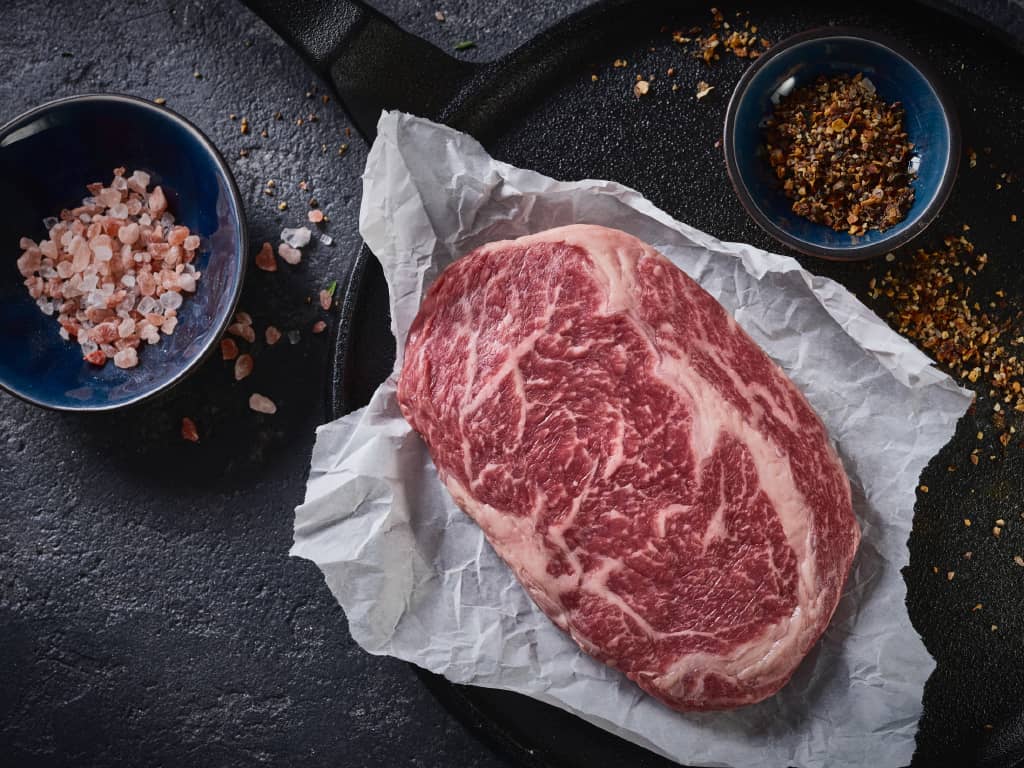
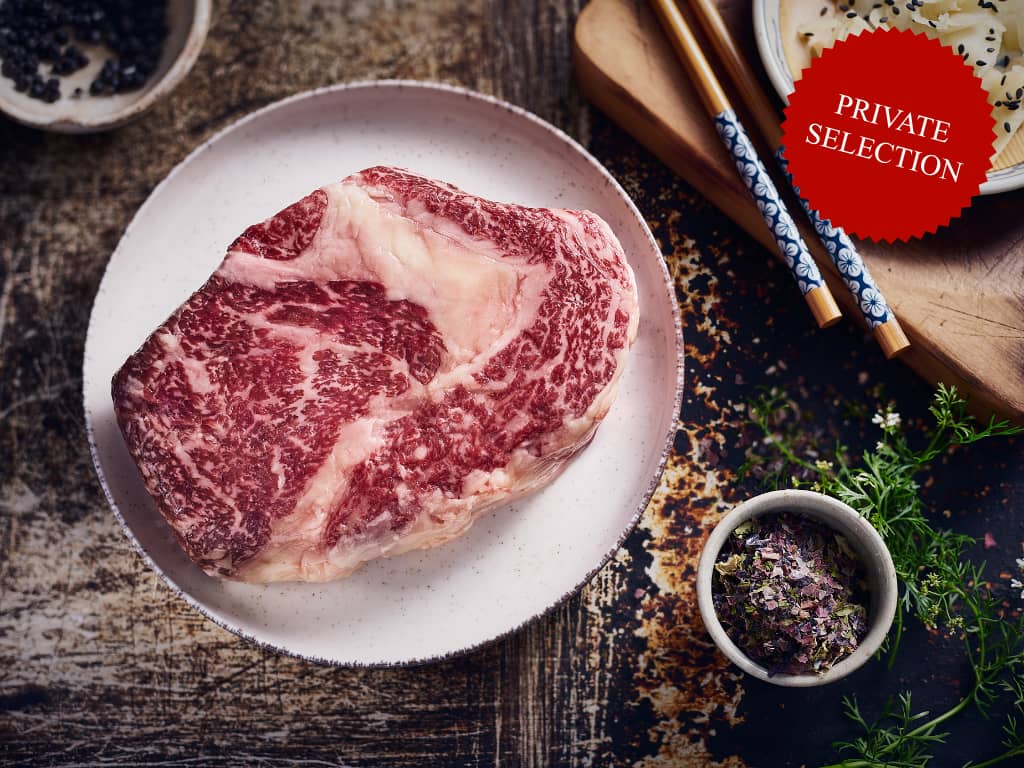
The rib eye steak (also called entrecôte) is located in the front back area of the Wagyu beef between the 8th and 12th rib. The name „rib eye“ is due to the round muscle strand that lies in the middle of the Wagyu steak (i.e., in the eye). This eye is surrounded by the meat of the rib cap, which is slightly more marbled. In terms of taste, it is more intense than the tenderloin, but slightly firmer to the bite.
Preparation recommendation:
Pan-frying / Grilling
Recommended preparation: medium (52-54°C core temperature)
medium-well (60-63°C core temperature)
Fry in a pan or on the grill over direct, high heat for 2.5 minutes on each side. Finish in the oven or on the grill (indirect zone) at 100°C until the desired internal temperature is reached. Use a meat thermometer to help with this. Let the meat rest for 2-3 minutes before slicing. Season with flaky salt and coarse pepper.
Rib Eye Cap
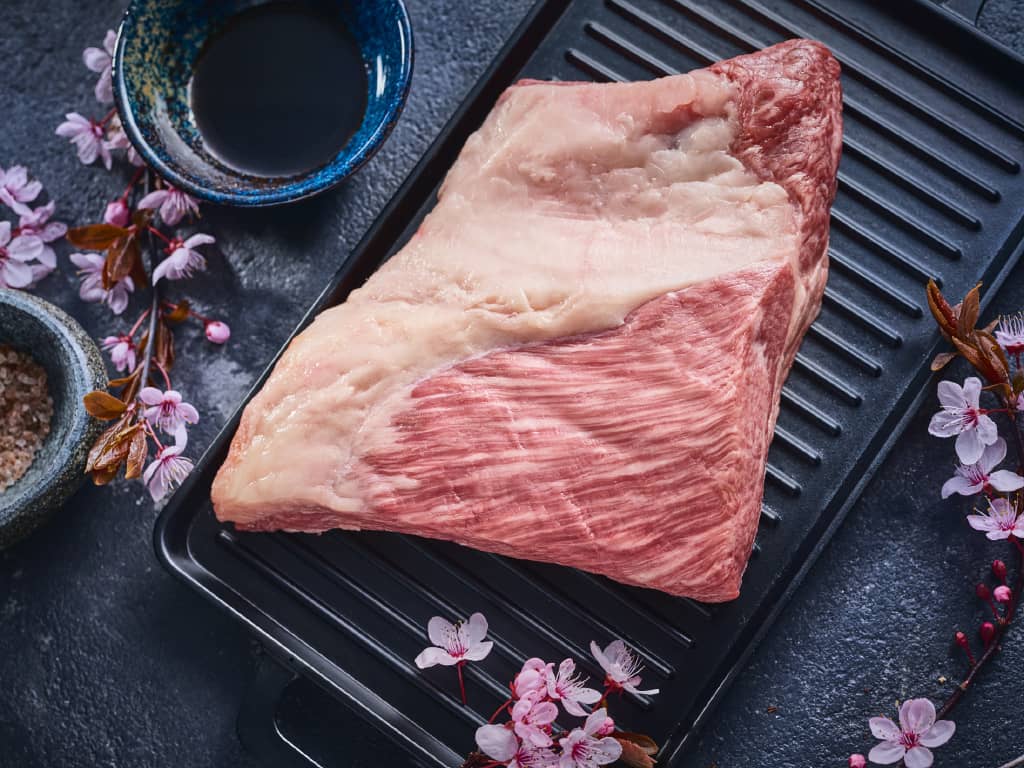
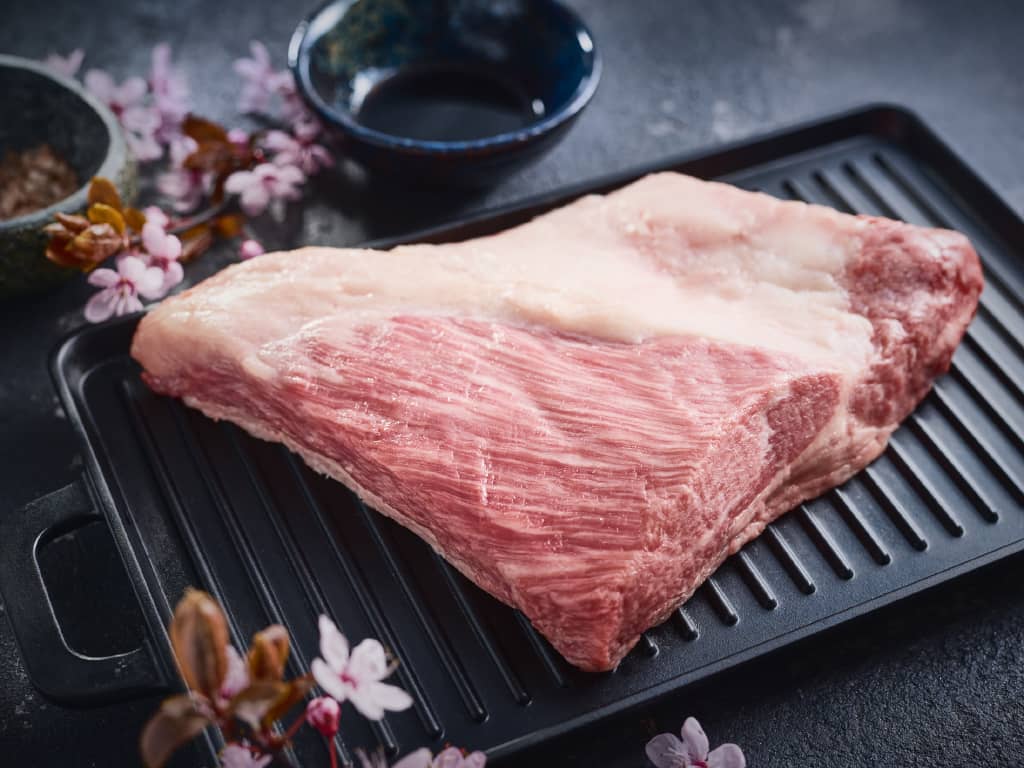
The rib eye cap is a true hidden gem. It sits on top of the rib eye and is separated by a layer of fat. While it doesn't quite match the unique tenderness of the entrecôte, it is a delight due to its consistent marbling and incredible flavor. Since this cut is often sliced lengthwise against the grain, you need to pay attention to how you cut it. If necessary, divide the long piece and then slice against the grain. You will be thrilled.
Tomahawk Wagyu Steak
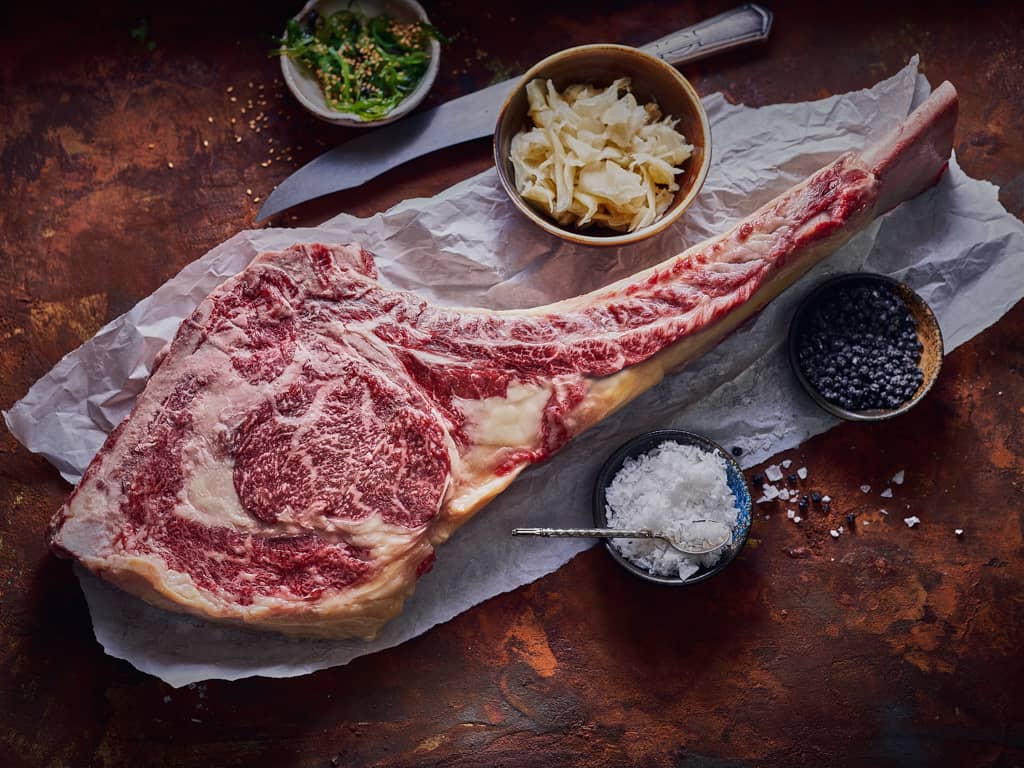
The Tomahawk steak also consists of the rib eye or entrecôte, with the difference that the rib bone is left attached to the piece of meat when cutting the steaks. Visually, the meat on the bone then resembles an axe.
Preparation recommendation:
Grilling/Pan-searing
Recommended cooking level: medium (54-56°C core temperature)
Heat the grill/cast-iron pan until very hot. Grill/sear the steak on both sides for 2-4 minutes each.
Grill: Remove the steak from the direct heat and bring it to a core temperature of 110°C using indirect heat.
Cast-iron skillet: Bring the steak to its target core temperature in a preheated oven at 110°C.
The optimal thickness for the steaks is between 5 and 6 cm.

Lizard
Wagyu Rump Steak
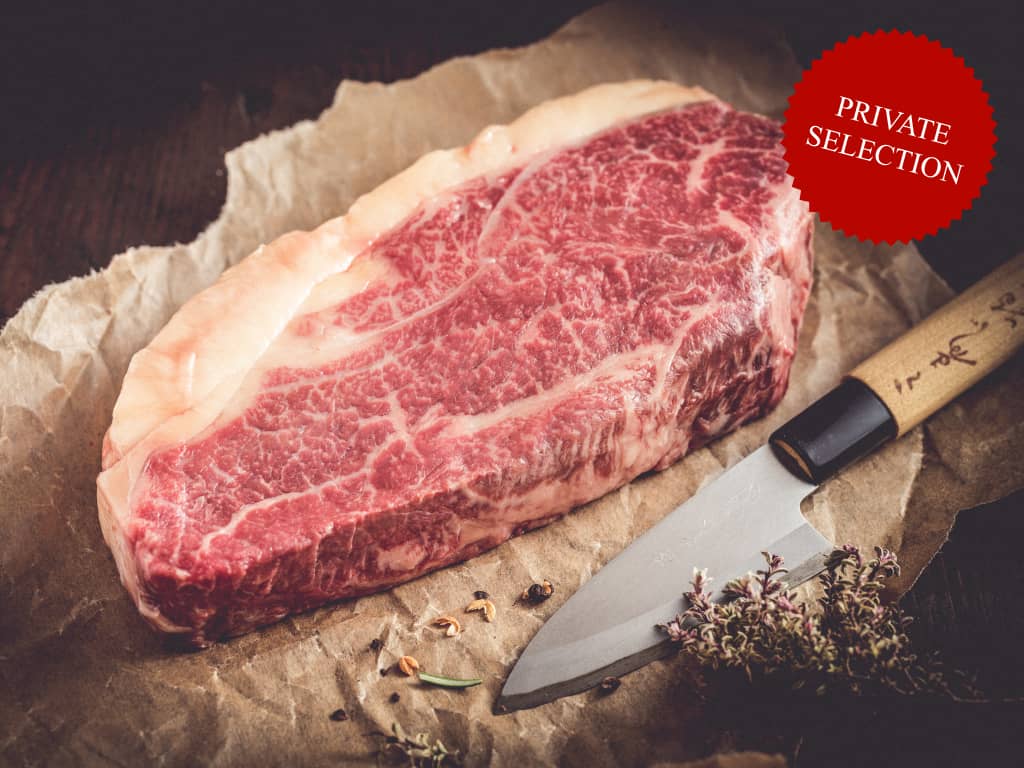
The roast beef or rump steak is cut from the middle part of the back. Characteristic of this cut is an even rim of fat on the Wagyu steak. It is fine-fibered and very tender with a buttery melt.
Preparation recommendation:
Pan-frying / Grilling
Recommended preparation: medium (52-54°C core temperature)
medium-well (60-63°C core temperature)
Sear or grill in a pan or on the grill over high heat for 2-3 minutes on each side. Then finish in the oven or on the grill (indirect heat zone) at 80°C until the desired core temperature is reached. Use a meat thermometer to help with this. Let rest for 2-3 minutes before slicing.
Season with flaky salt and coarse pepper.
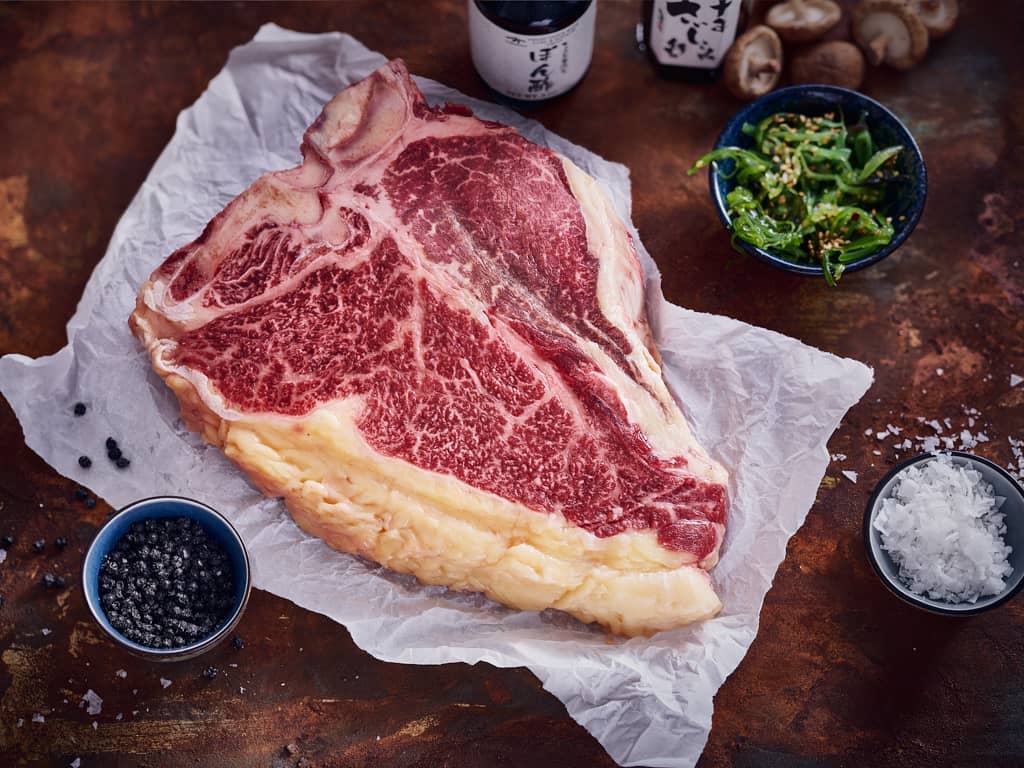
Porterhouse Steak
The porterhouse steak from Wagyu beef consists of a section of tenderloin (with a tenderloin portion of more than 1.5 cm) and a section of roast beef from the rear back area. The two pieces of meat are separated by a T-shaped bone.
Preparation recommendation:
Grilling/Pan-searing
Recommended cooking level: medium (54-56°C core temperature)
Heat the grill/cast-iron pan to a high temperature. Sear the steak on both sides for 2-4 minutes each.
grill / sear.
Grill: Remove the steak from the direct heat and bring it to a core temperature of 110°C using indirect heat.
Cast-iron skillet: Bring the steak to its target core temperature in a preheated oven at 110°C.
The optimal thickness for the steaks is between 5 and 6 cm.
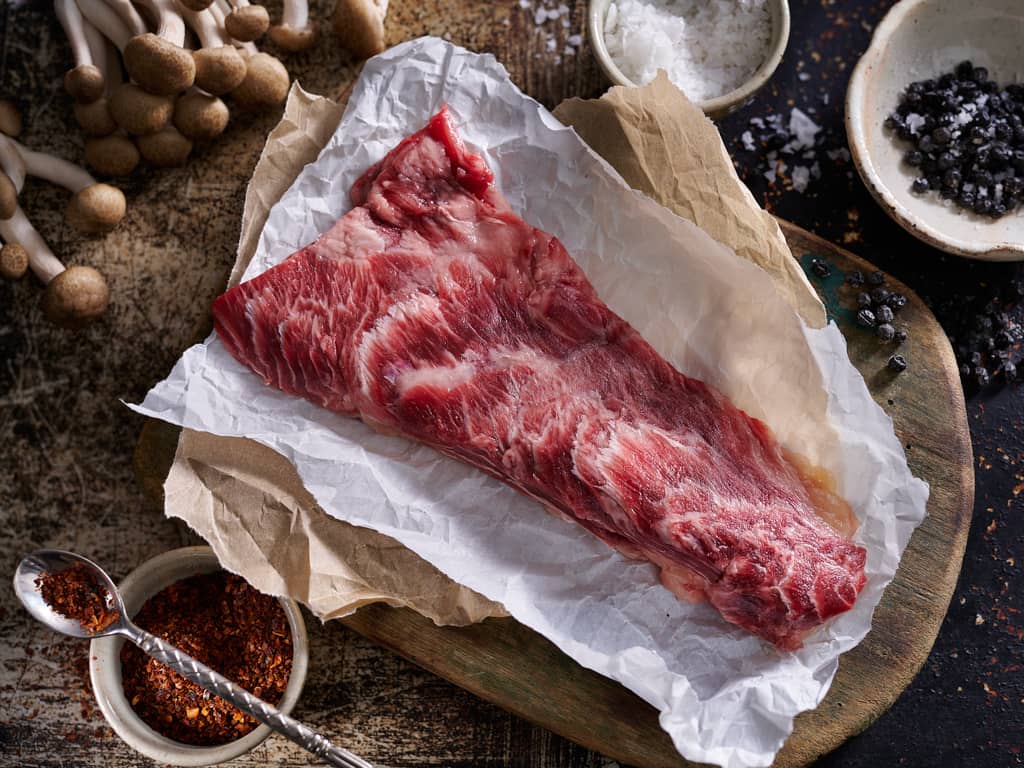
Chain
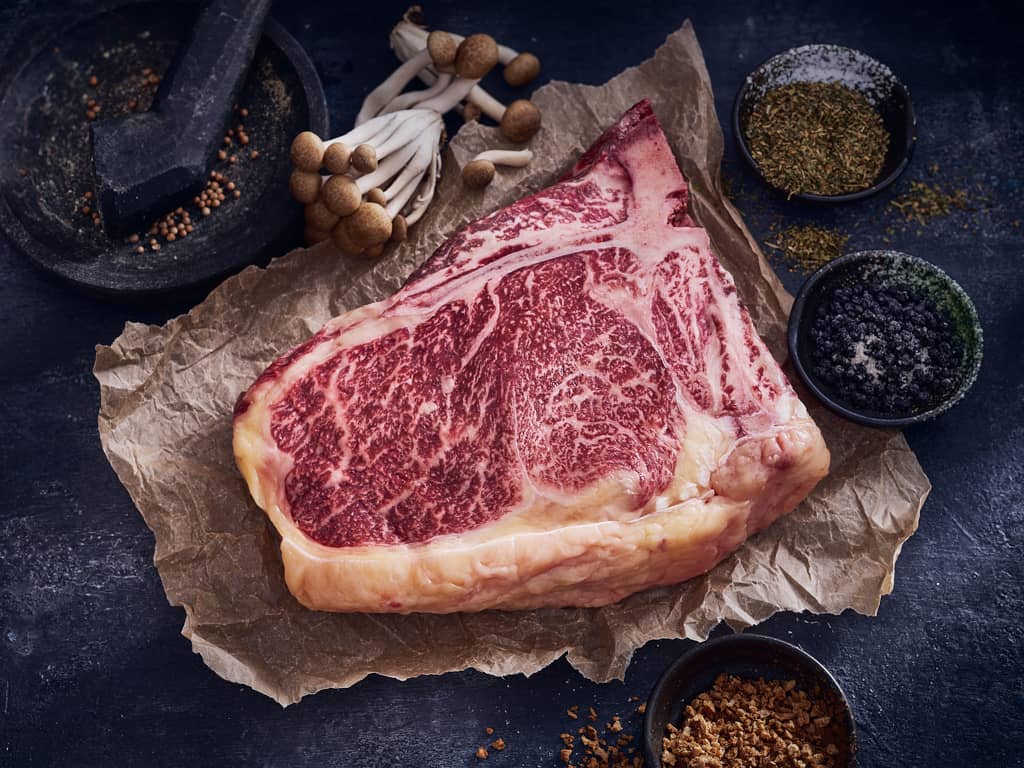
T-Bone Steak
Like the Porterhouse steak, the T-bone steak comes from the rump steak/roast beef cut. Its distinguishing feature is the T-shaped bone that separates the rump steak/roast beef from the tenderloin (with up to 1.5 cm of tenderloin).
Preparation recommendation:
Grilling/Pan-searing
Recommended cooking level: medium (54-56°C core temperature)
Heat the grill/cast-iron pan to a high temperature. Sear the steak on both sides for 2-4 minutes each.
grill / sear.
Grill: Remove the steak from the direct heat and bring it to a core temperature of 110°C using indirect heat.
Cast-iron skillet: Bring the steak to its target core temperature in a preheated oven at 110°C.
The optimal thickness for the steaks is between 5 and 6 cm.
Balster Cut
Fillets
Wagyu Filet
The tenderloin is one of the most well-known and, above all, most tender steak cuts. It is located under the spine and the back muscle and is therefore rarely used, which is its special Tenderness explained. It is lean, has a soft texture, and is marbled with very fine veins of fat.

Wagyu tenderloin head
The tenderloin head is the noble centerpiece of the tenderloin – robust, round, and exceptionally juicy. Because of its harmonious marbling it develops an intense Wagyu aroma when pan-fried while remaining incomparably tender. Perfect for luxurious medallions or steaks that make an impression at the table and literally melt in your mouth.
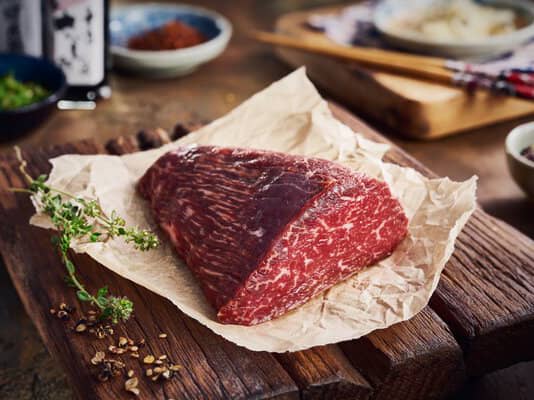
Wagyu beef tenderloin tip
The tenderloin tip is the fine, narrow end of the tenderloin – particularly lean, tender, and full of elegance. It captivates with its buttery texture and is exceptionally well-suited for sliced meat dishes, fondues, or Asian stir-fry dishes. A cut that, despite its slender shape, delivers big on flavor and conveys the unmistakable Wagyu character.
Preparation of fillets
Pan-frying / Grilling
Recommended preparation: medium (55-56°C core temperature)
medium-well (60-63°C core temperature)
Lightly salt the Wagyu steak on both sides and sear it over high heat in a pan or on the grill. Then finish cooking it in the oven or on the grill (indirect heat zone) at 100°C until it reaches an internal temperature of 55-56°C. Use a meat thermometer to help with this.
Out of the box
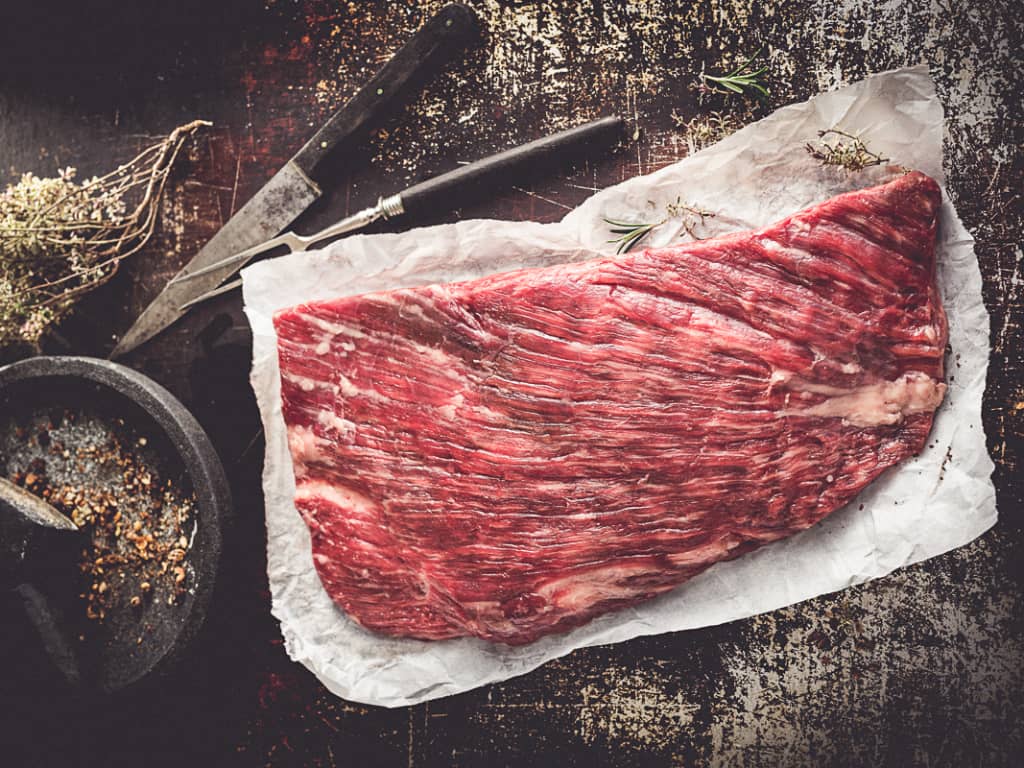
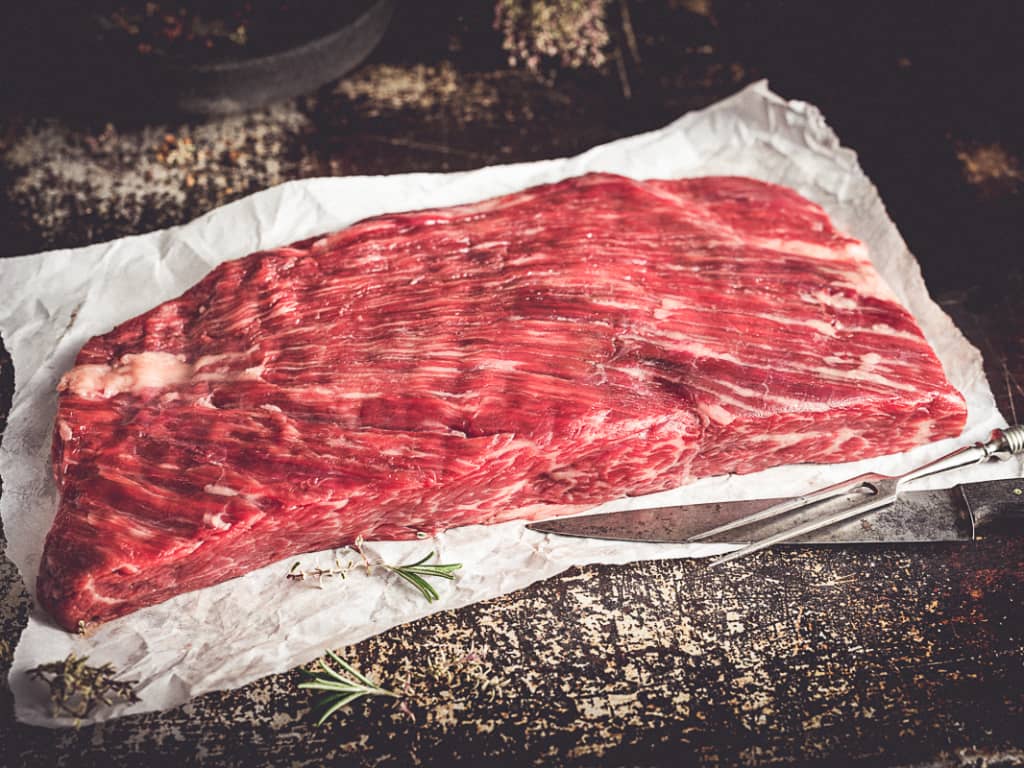
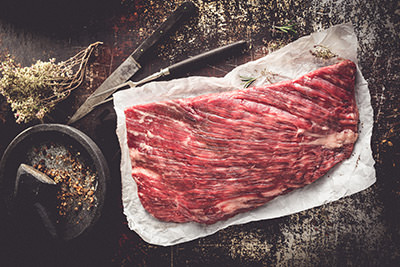
Flank Steak
The flank steak comes from the beef flank. It is very juicy, has long fibers, and has a firm bite. The layering of meat and fat is particularly striking.
Preparation recommendation:
Pan-frying / Grilling
Recommended cooking level: medium (54-55°C internal temperature)
medium-well (60-63°C core temperature)
Sear/grill over high heat on both sides for 2 minutes until well-browned. Afterward, finish cooking on the grill in the indirect heat zone—alternatively in the oven—at a temperature of 110-120°C until the desired internal temperature is reached. Use a meat thermometer to help with this. Before eating, let the meat rest for about 4-5 minutes. Slice against the grain. Season with flaky salt and coarse pepper.
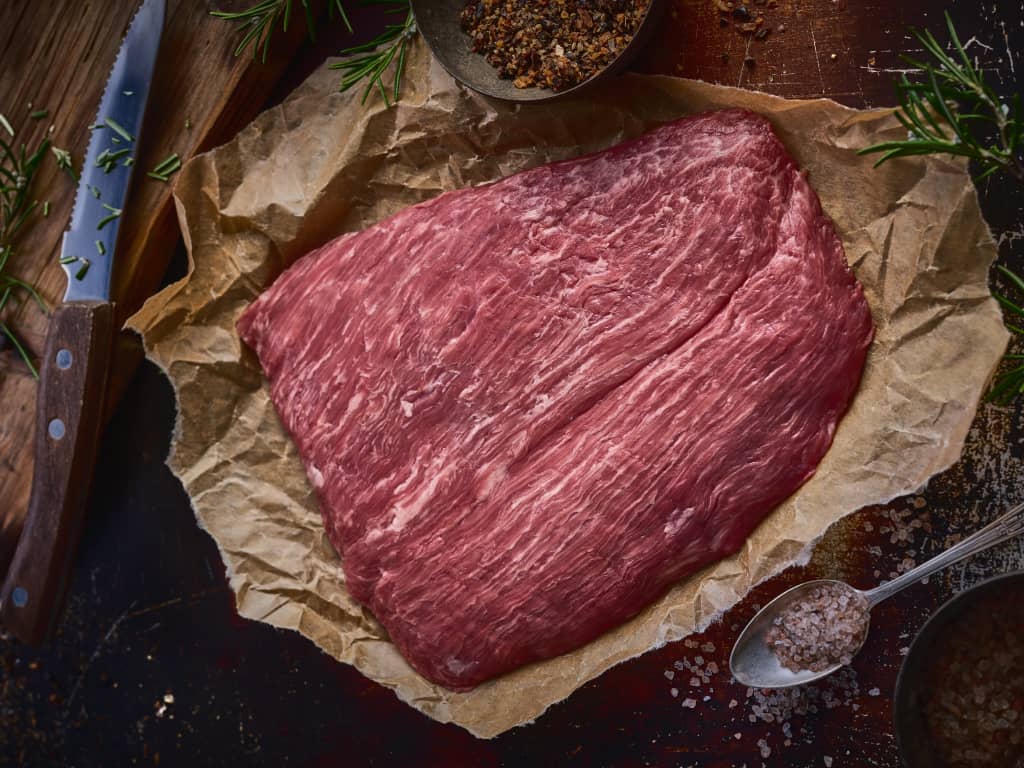
Flap Meat Steak
The Wagyu flap meat steak is still relatively unknown here. It is located between the brisket and flank and can also be described as the „big brother“ of the flank steak. Like its little brother, the flap is relatively coarse-grained and heavily marbled. Preparation is the same as for flank steak.
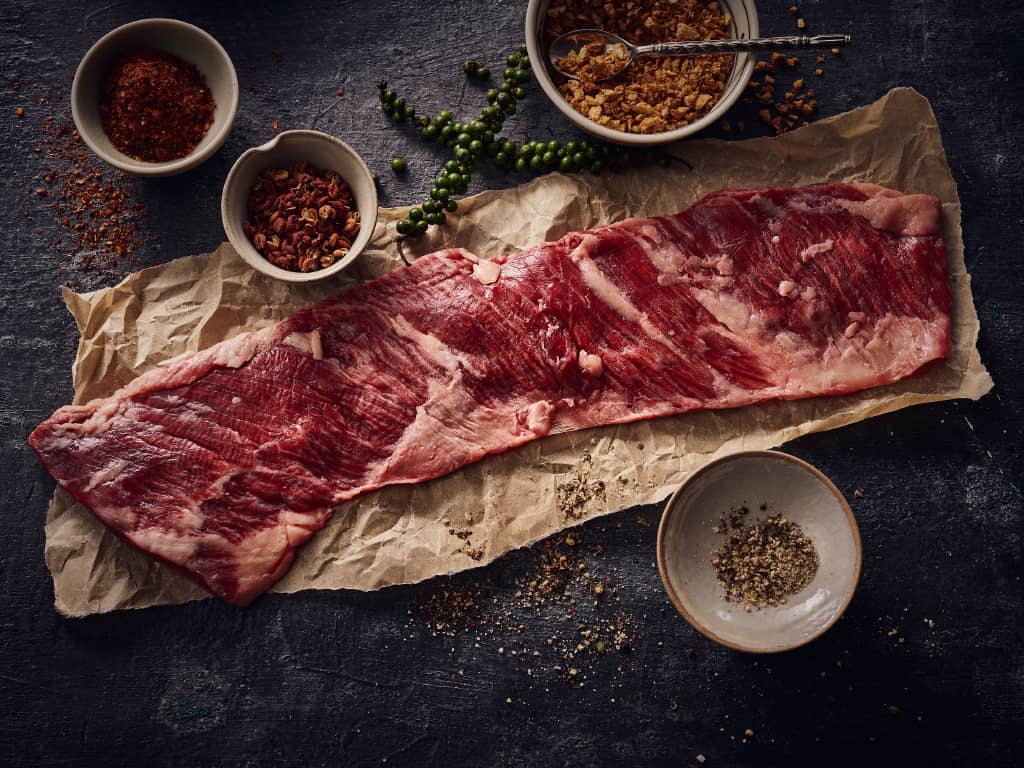
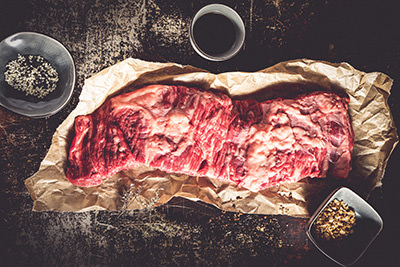
Wagyu Skirt Steak
The skirt steak (diaphragm) comes from a strong muscle located between the stomach and the lungs. It has a coarse grain and firm texture, with pronounced marbling. It has a very robust and aromatic flavor.
Preparation recommendation:
Pan-frying / Grilling
Recommended cooking level: medium (54-55°C internal temperature)
medium-well (60-63°C core temperature)
Sear/grill over high heat on both sides for 2 minutes until well-browned. Afterward, finish cooking on the grill in the indirect heat zone—alternatively in the oven—at a temperature of 110-120°C until the desired internal temperature is reached. Use a meat thermometer to help with this. Before eating, let the meat rest for about 4-5 minutes. Slice against the grain. Season with flaky salt and coarse pepper.

Hanging Tender (Hanger Steak, Onglet)
The hanging tender actually belongs to the offal, even though it is pure muscle meat. It is coarse-fibered and relatively firm, but very flavorful. The hanging tender is very well suited good for marinating.
Preparation recommendation:
Pan-frying / Grilling in one go
Recommended cooking level: medium (54-56°C core temperature)
medium-well (60-63°C core temperature)
Sear on both sides in a pan or on the grill over medium-high heat until well browned. Then let finish cooking in the oven or on the grill (indirect heat zone) at 120-130°C until reaching an internal temperature of 54°C. Use a meat thermometer to help with this. Let rest briefly before slicing. Season with flaky sea salt and coarse pepper.
From the round
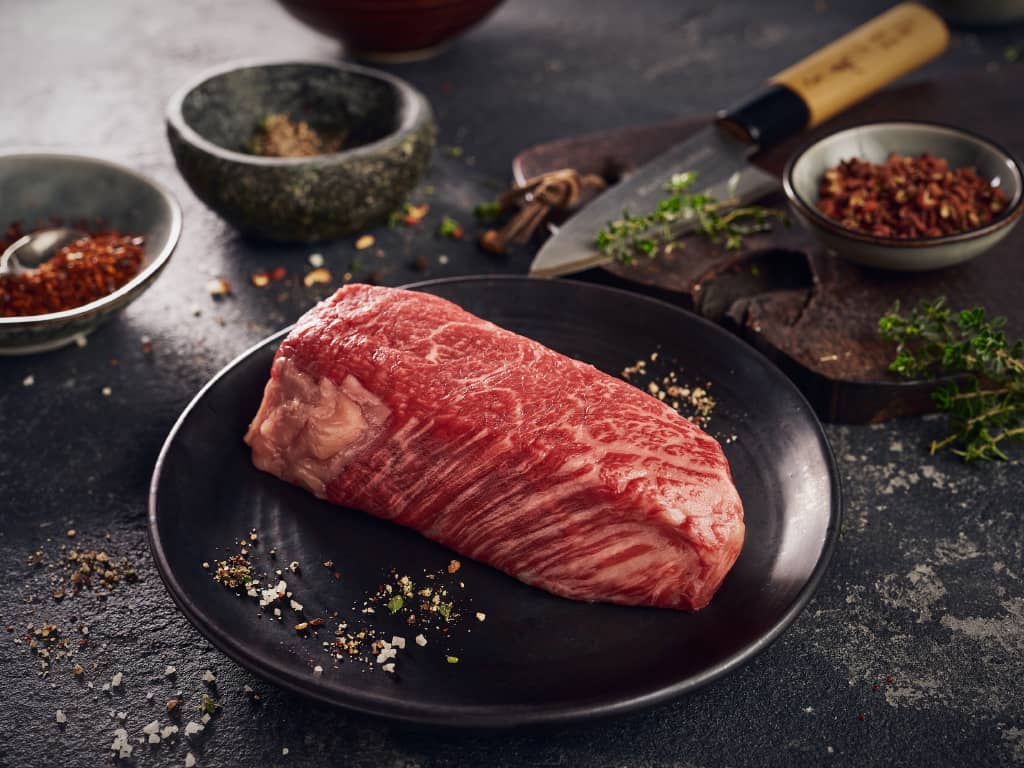
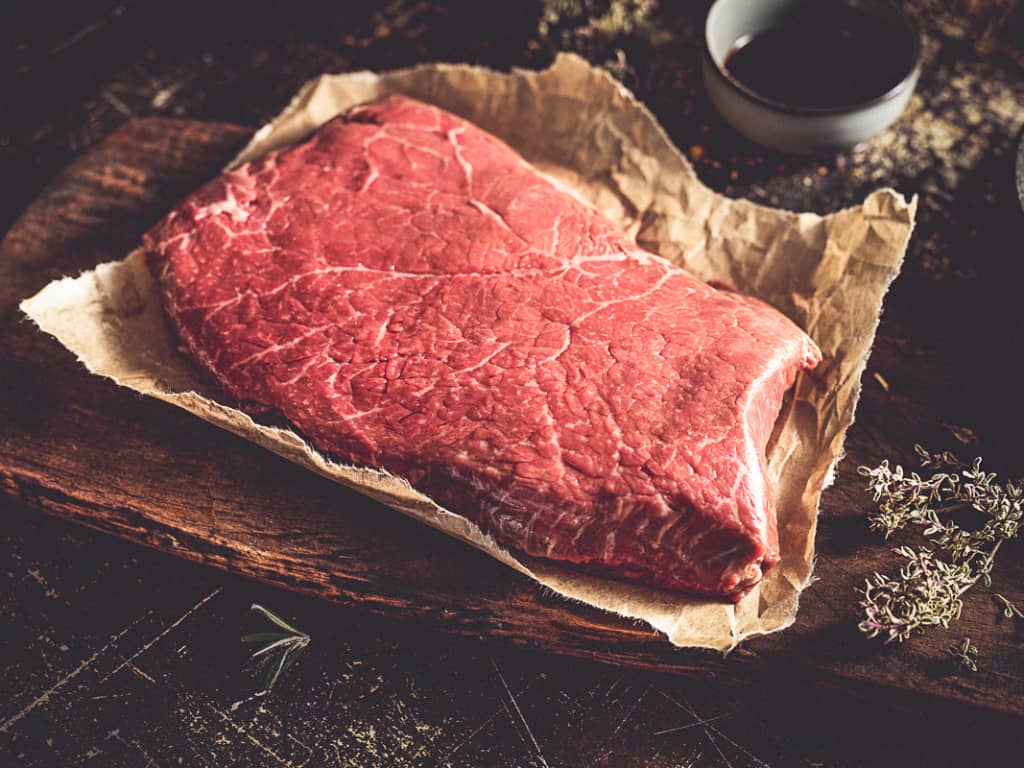
Wagyu rump steak
The Wagyu rump steak is very lean and flavorful and is marbled with very fine veins of fat. It is perfect for quick pan-frying and grilling, but can also be used very well for fondue or raclette.
Preparation recommendation:
Pan-frying / Grilling
Recommended cooking level: medium (54-56°C core temperature)
medium-well (60-63°C core temperature)
Sear in the pan or on the grill over direct, high heat for 2-3 minutes, depending on the thickness of the meat. Then finish in the oven or on the grill (indirect zone) at 100°C until the desired internal temperature is reached. Use a meat thermometer to help with this. Let the steak rest for a bit before eating and season with flaky sea salt and coarse pepper.
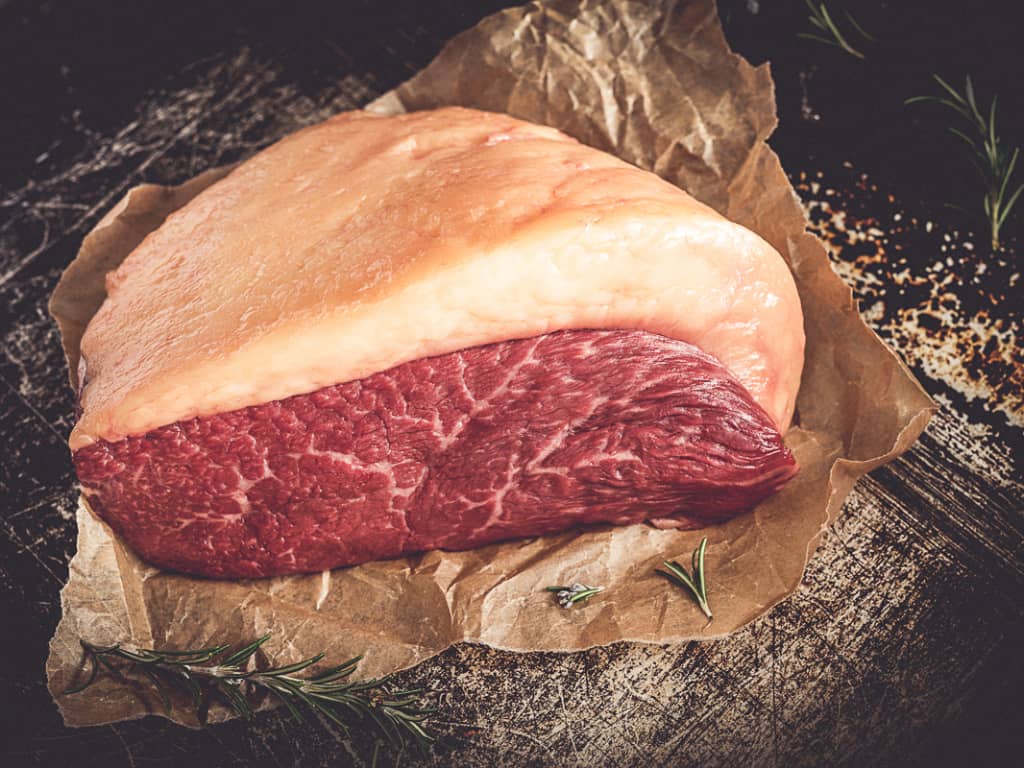
Tafelspitz (Picanha
Wagyu round steak
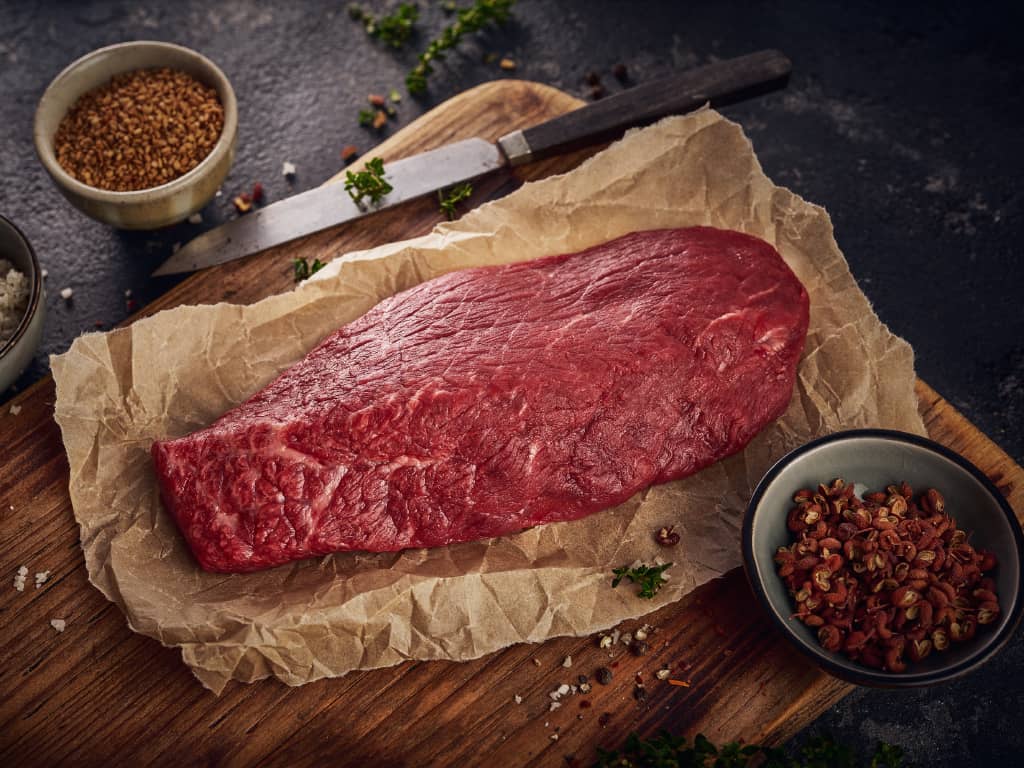
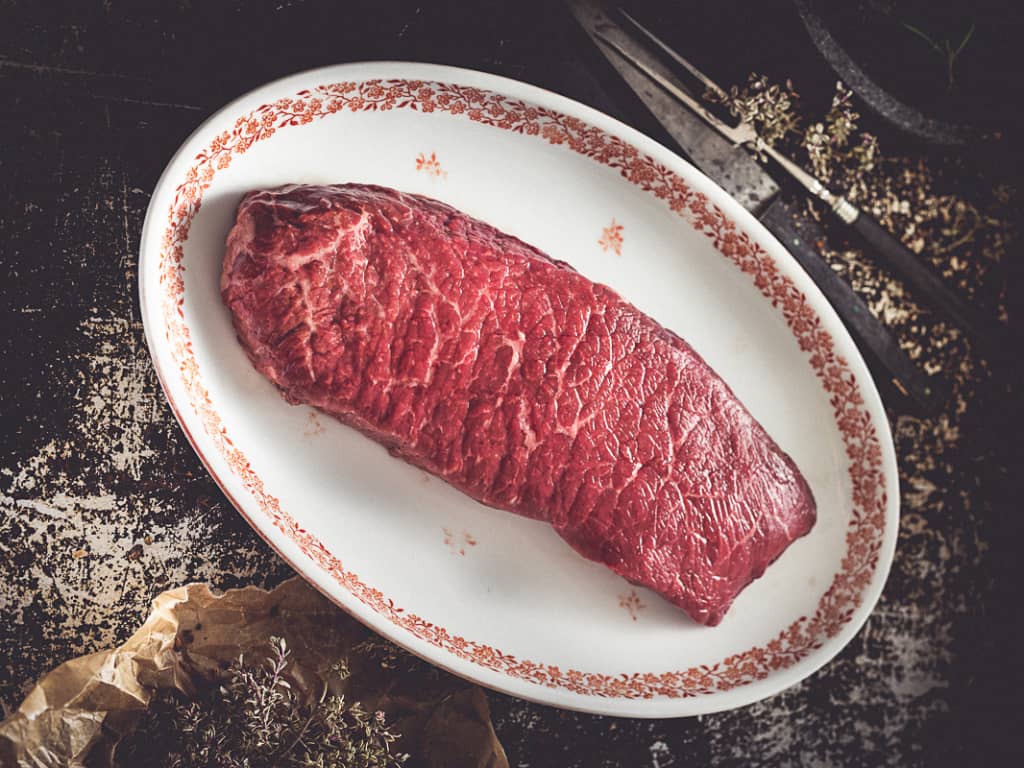
The round steak, cut from the round cap (knuckle), is tender, flavorful, and naturally marbled to varying degrees. It’s ideal for quick-frying or grilling and expands significantly during cooking.
Rump steak
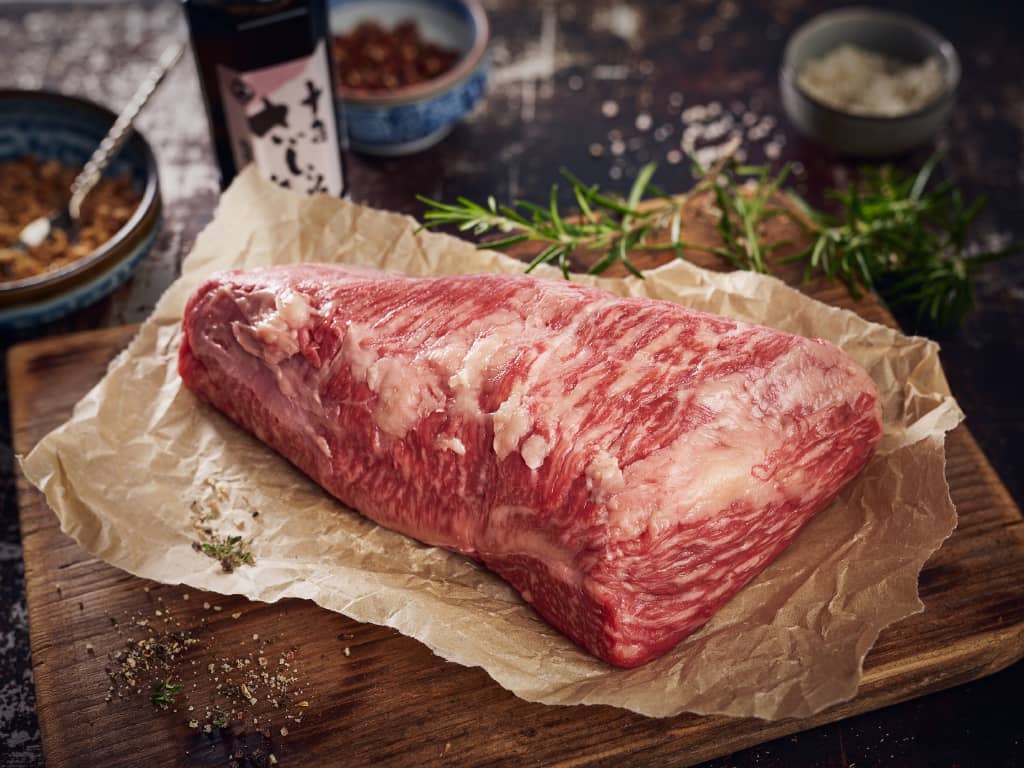
The Bürgermeisterstück lies between the hip and the lower belly. It is a very tender, lean, and juicy cut of meat. In the past, these cuts of meat were reserved for the mayor and the pastor, which is how it got its name. Cut into steaks, it is perfectly suited for pan-frying.
Preparation recommendation:
Grilling/Pan-searing
Recommended cooking level: medium (54-56°C core temperature)
Grill the tri-tip hot on both sides for 1-2 minutes over very high heat, or sear it in a cast-iron skillet on the stove.
Bring the meat to the desired core temperature on the indirect zone of the grill or in the oven at 130°C. Let rest for 2-4 minutes before consuming.
From the top round
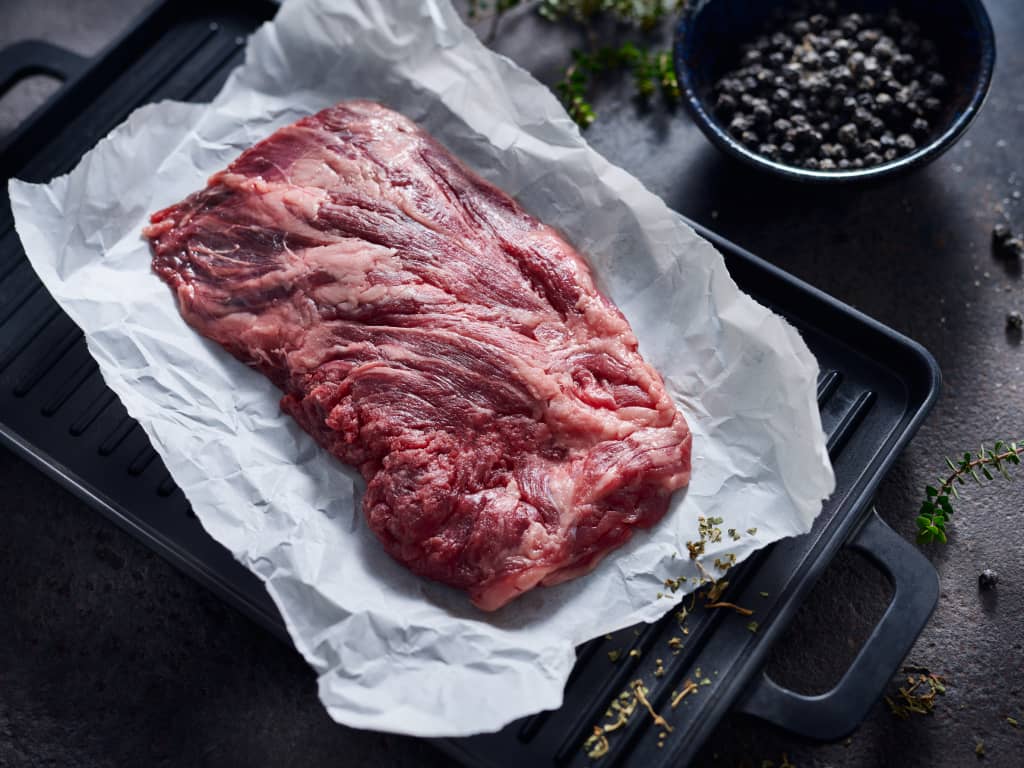
Spider Steak, Fledermaus Steak
The Wagyu spider steak is a true insider tip among barbecue enthusiasts. It is located directly on the hip bone, yet it is a piece of the top round. This steak cut owes its name to the web-like marbling. This makes it extra juicy and has an intense flavor.
Preparation recommendation:
Grilling/Pan-searing
Recommended cooking level: medium (54-56°C core temperature)
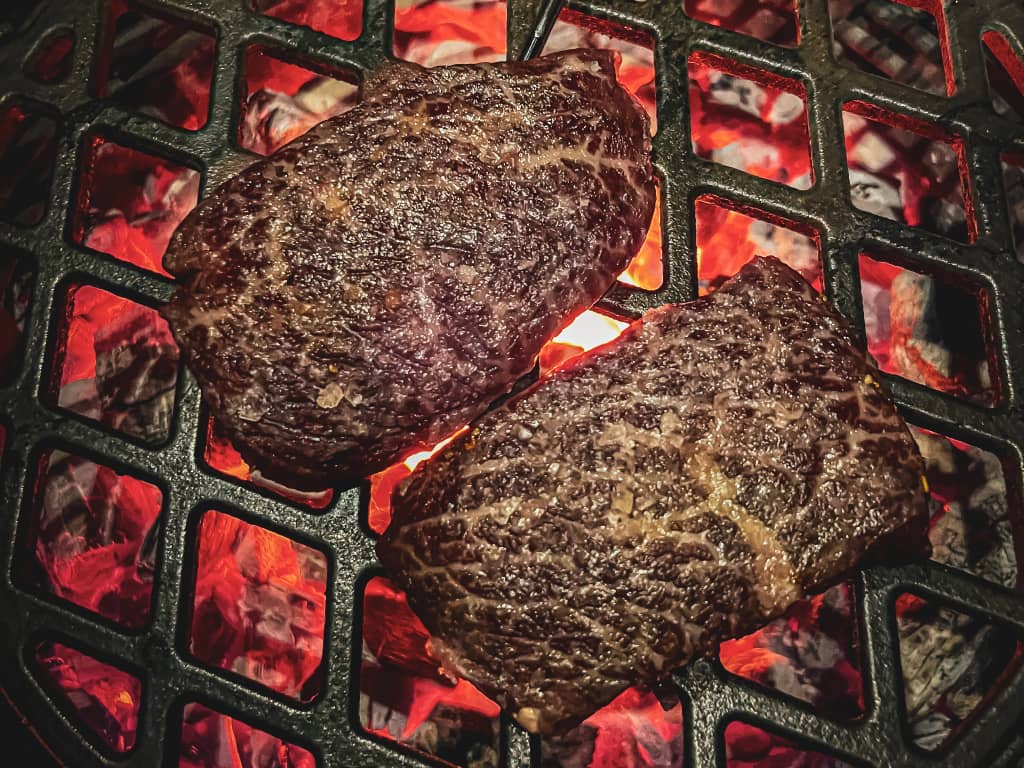
Sear/grill over high heat from both sides for approx. 2 minutes each until browned.
Remove the steak from the direct heat and place it in the indirect zone on the grill or, alternatively, bring it to the desired core temperature in the oven (110-130°C).
This happens very quickly with this cut due to the small thickness and high temperature.
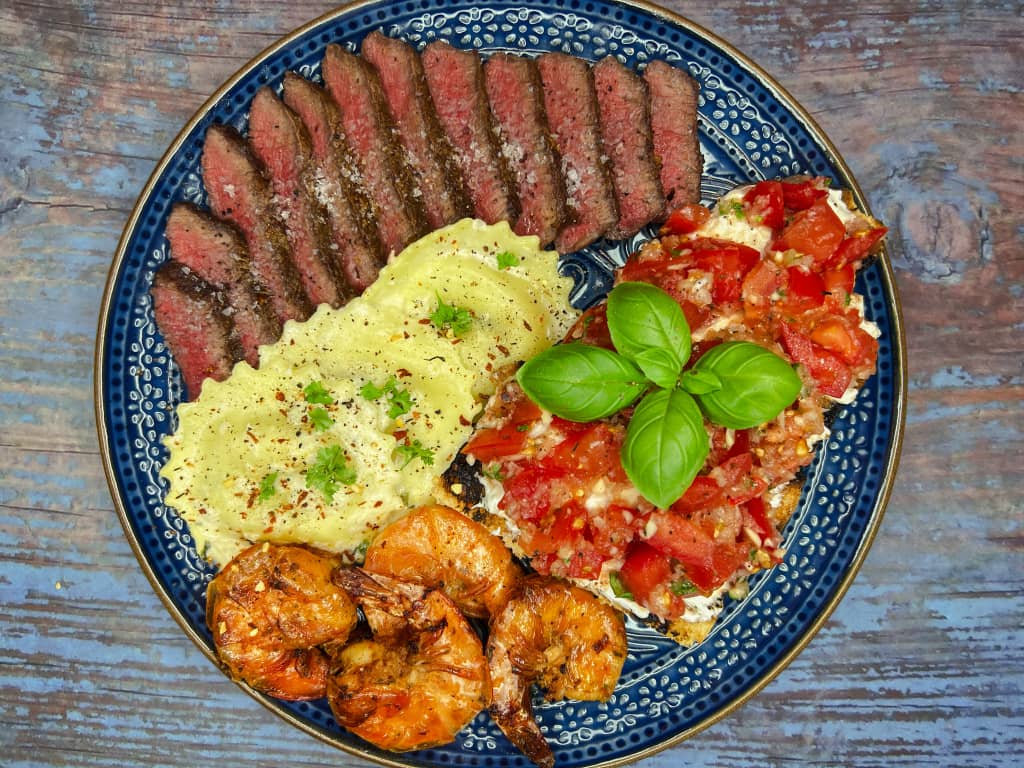
Rump steak
The rump cap steak is cut from the inside of the Wagyu beef round, the topside steak, and consists of lean, short-fibered meat. It has a fine marbling and is suitable for grilling and quick frying.
Preparation recommendation:
Pan-frying / Grilling
Recommended cooking level: medium (54-56°C core temperature)
medium-well (60-63°C core temperature)
Sear or grill in the pan or on the grill over direct, high heat for 2-3 minutes on each side. Here, too, the thickness of the steak is crucial. Bring to the desired core temperature in the oven or on the grill (indirect zone) at 100°C. Use a meat thermometer to help with this. Let rest for 2-3 minutes before slicing. Season with flaky sea salt and coarse pepper.
Roasting / Braising / Grilling
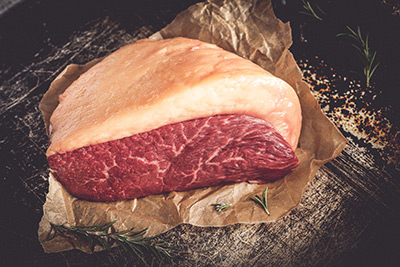
Tafelspitz
The rump cap, also known as Tafelspitz, is located in the rearmost hip area of the Wagyu beef and has a distinct fat cap. Due to its tapered shape, it was given the name „Tafelspitz“ in Austria. The meat is evenly and finely marbled and can be cooked whole for Braising and Roasting can be used, or prepared as steaks („Picanha“).
Preparation recommendation:
Skillet and then oven
Serving suggestion: perfect at a core temperature of 60°C
With the Tafelspitz, the „fat cap“ should not be removed, or should only be trimmed slightly. Briefly sear the meat in the pan on all sides (starting with the fat side) so that roasted aromas can develop. Then bring the Tafelspitz to an internal temperature of 60°C in the oven at 150°C. Use a meat thermometer to help with this. Let it rest briefly before slicing.
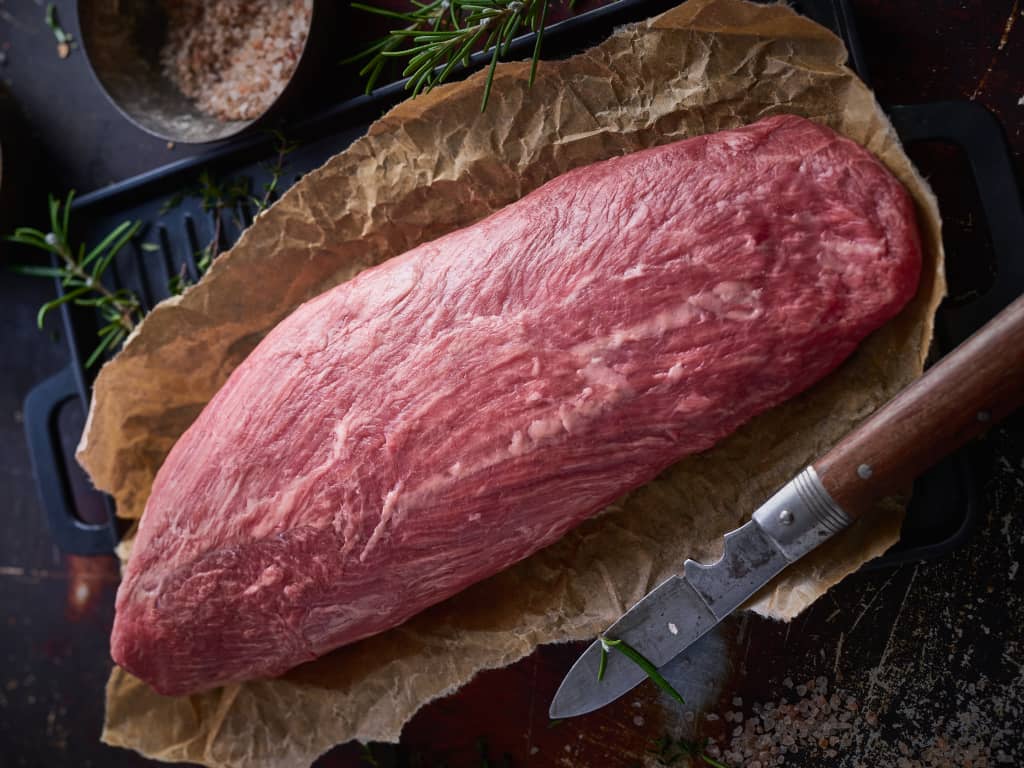
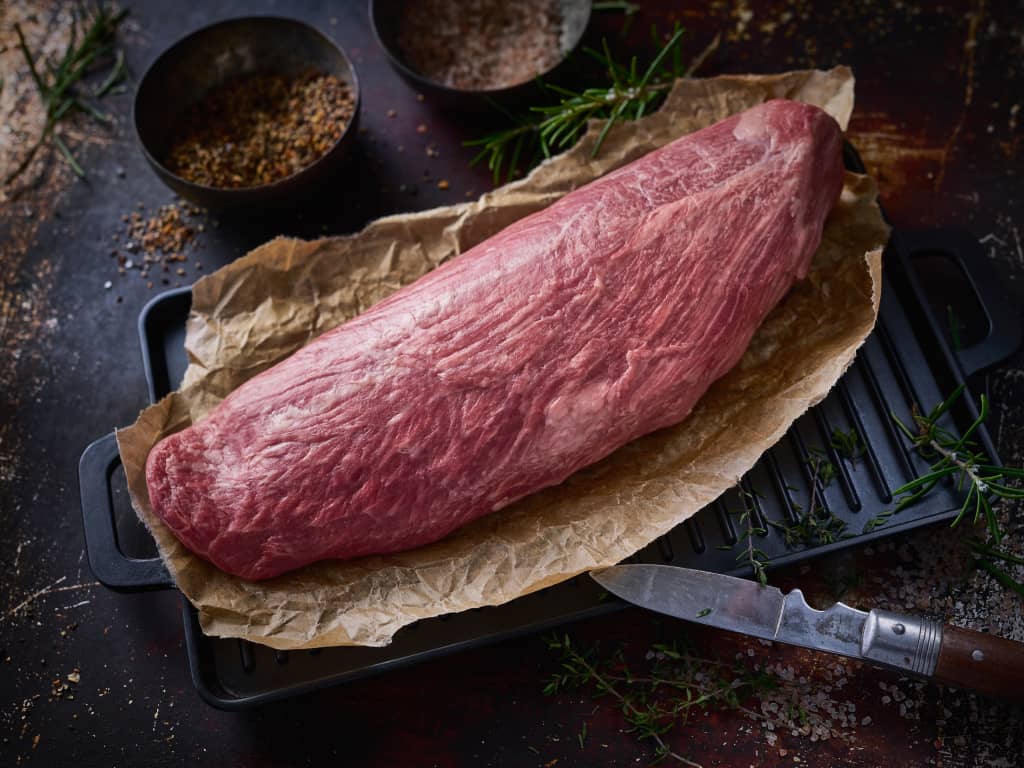
Mock tender
The mock tender (also known as the shoulder tender) looks very similar to the true tenderloin, which is how it got its name. Since the mock tender is traversed by a strong tendon, it is more suited for Smoking and Braising. If you cut the tenderloin by cutting out the central tendon, you can get nice medallions with a firm bite.
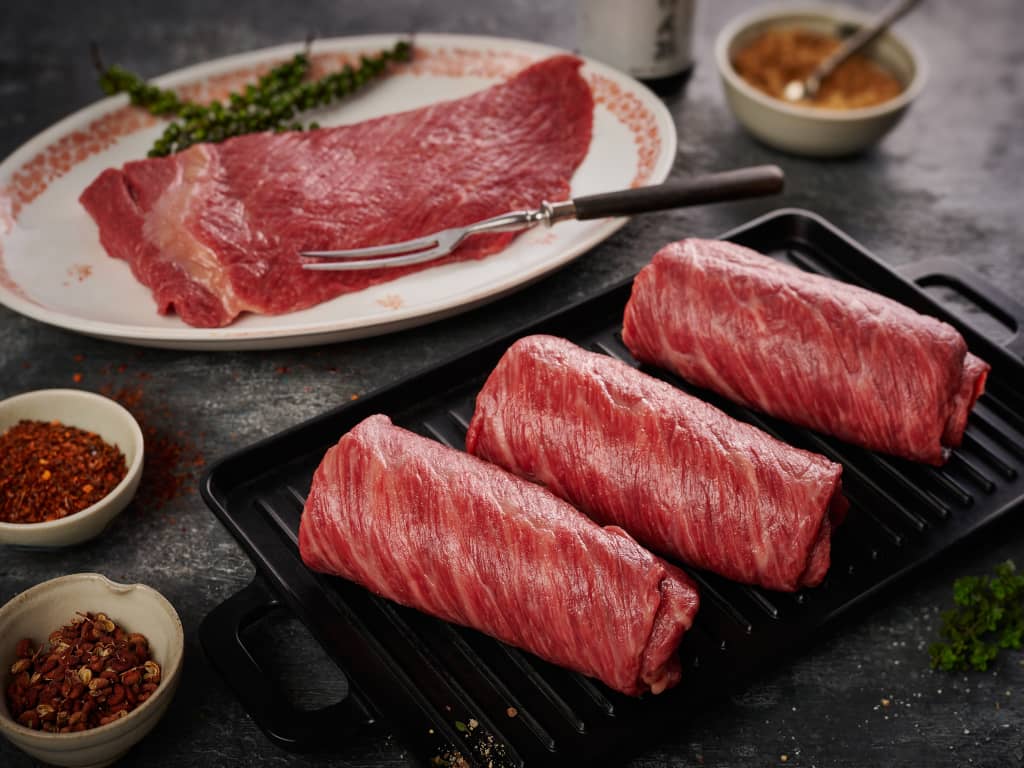
Wagyu beef roulades
Outside of the barbecue season, hearty roulades are cut from the top round, which become juicy and tender due to the very good marbling.
Sliced meat

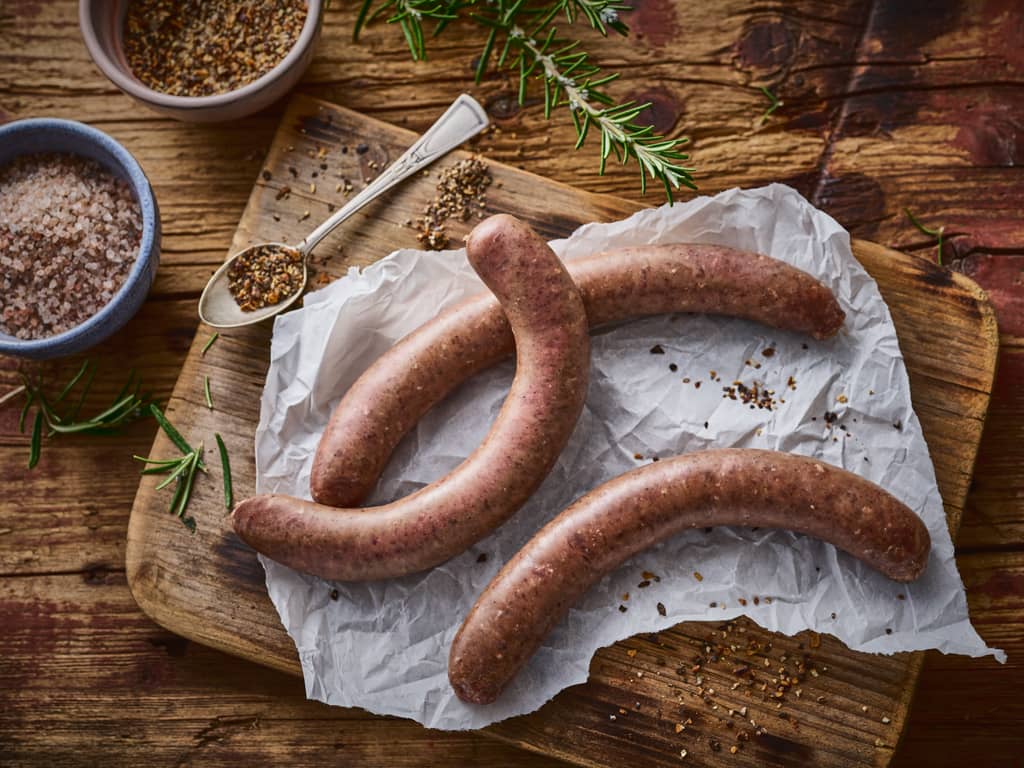

Roast and bratwurst
Please do not expose to excessive heat, as they are made of natural casing and can therefore burst quickly. Therefore, grill indirectly for 10 minutes and only then sear briefly on both sides for about a minute to develop roasted aromas. Alternatively, they can also be pan-fried at a moderate heat.
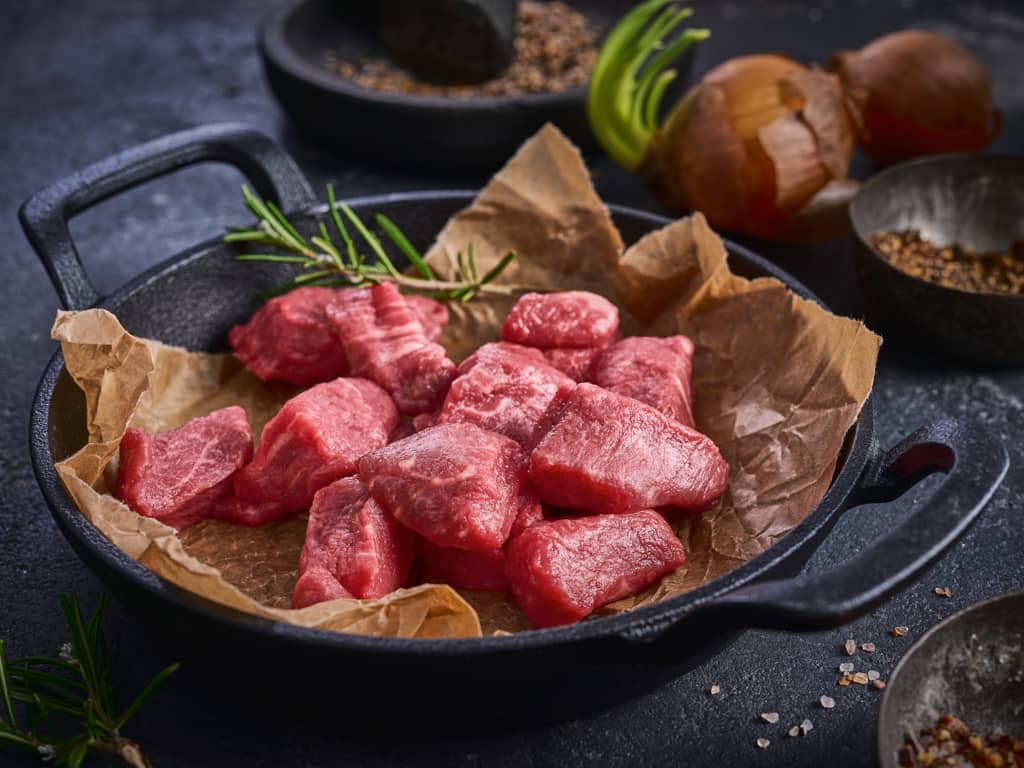
Goulash
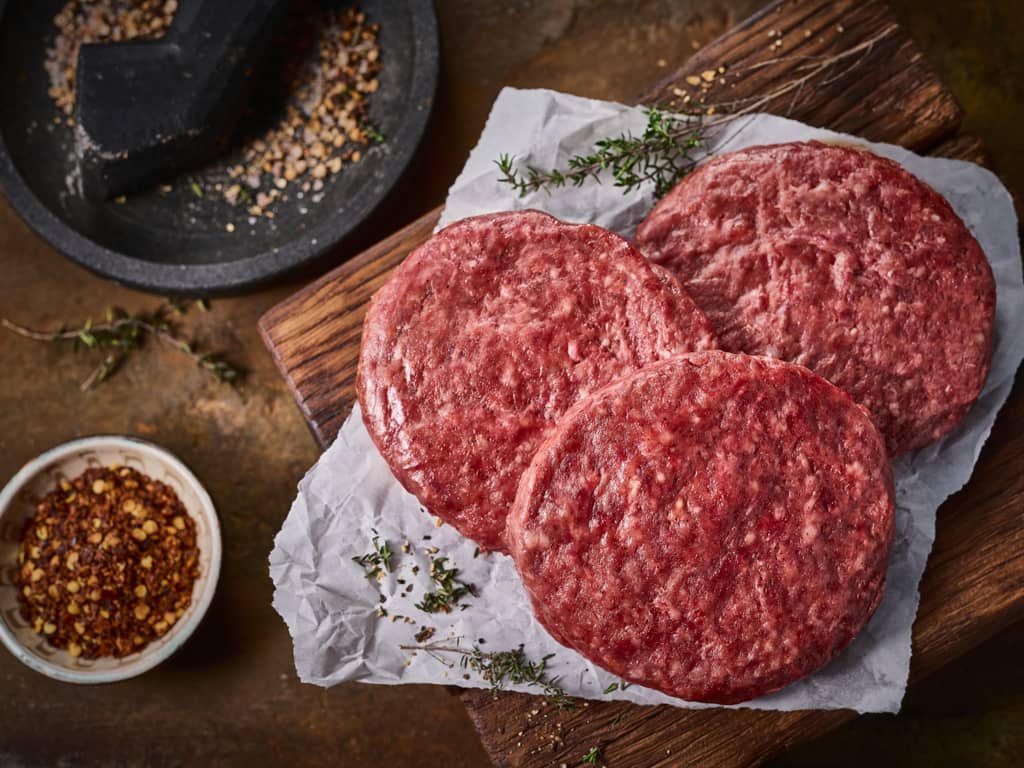
Patties
Please do not place the patties directly on the grill, but cook them on the plancha or in a frying pan. Otherwise, the delicious fat could leak out and cause a lot of smoke. You can use the fat nicely to brush the burger buns and/or use it as fat for fried potatoes.
Please do not flip the patties until you can turn them easily. If they are still sticking, it is still too early.
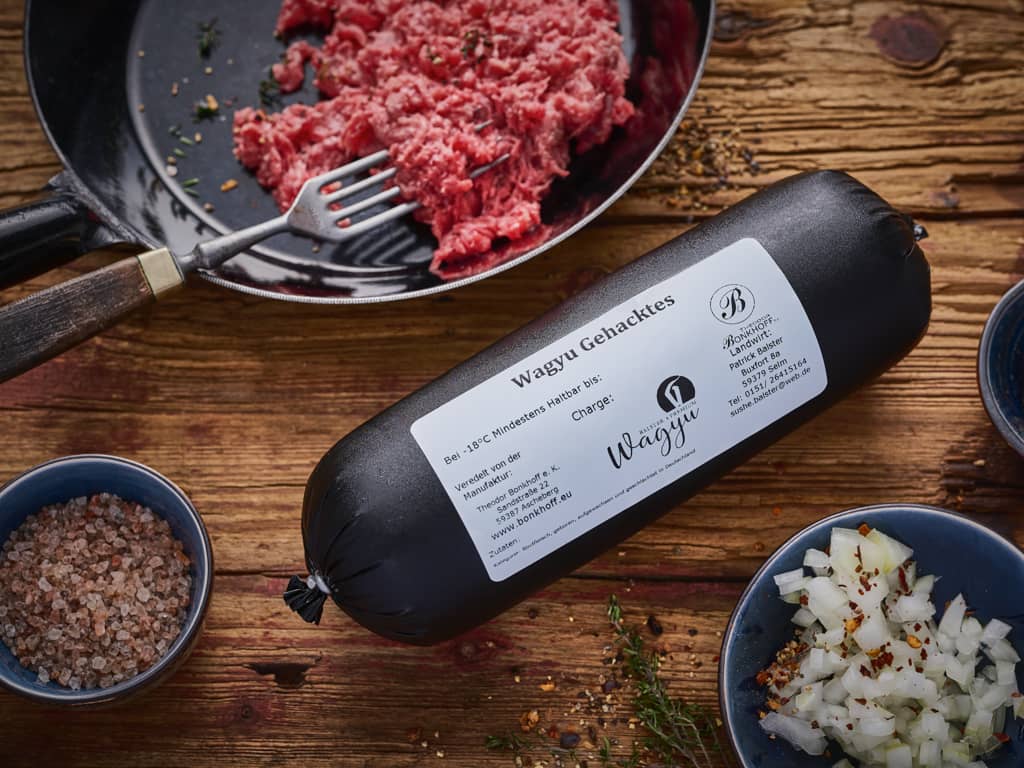
Ground meat
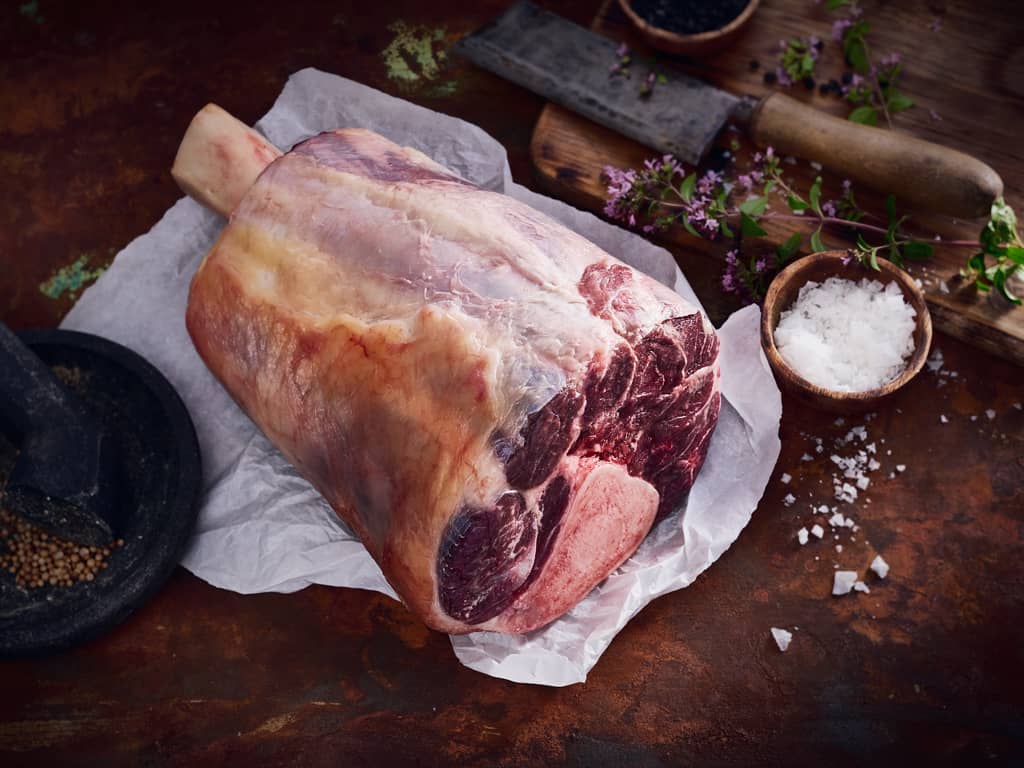
Beefhammer
shank
Bone
Marrow bone
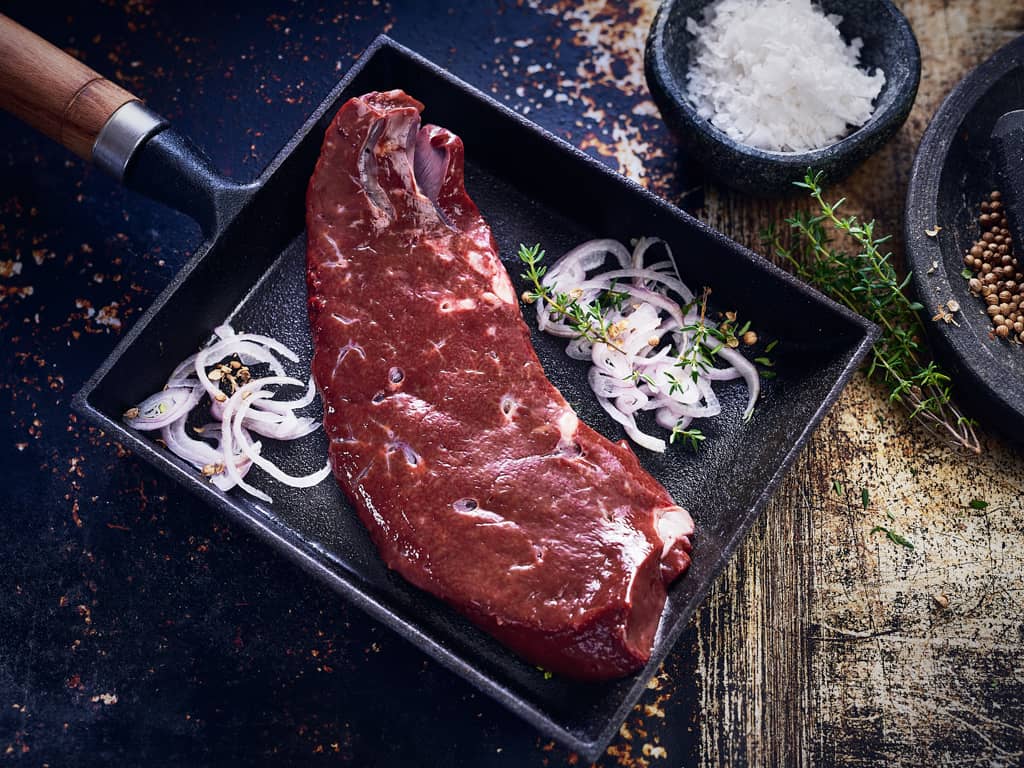
Liver
Short Ribs
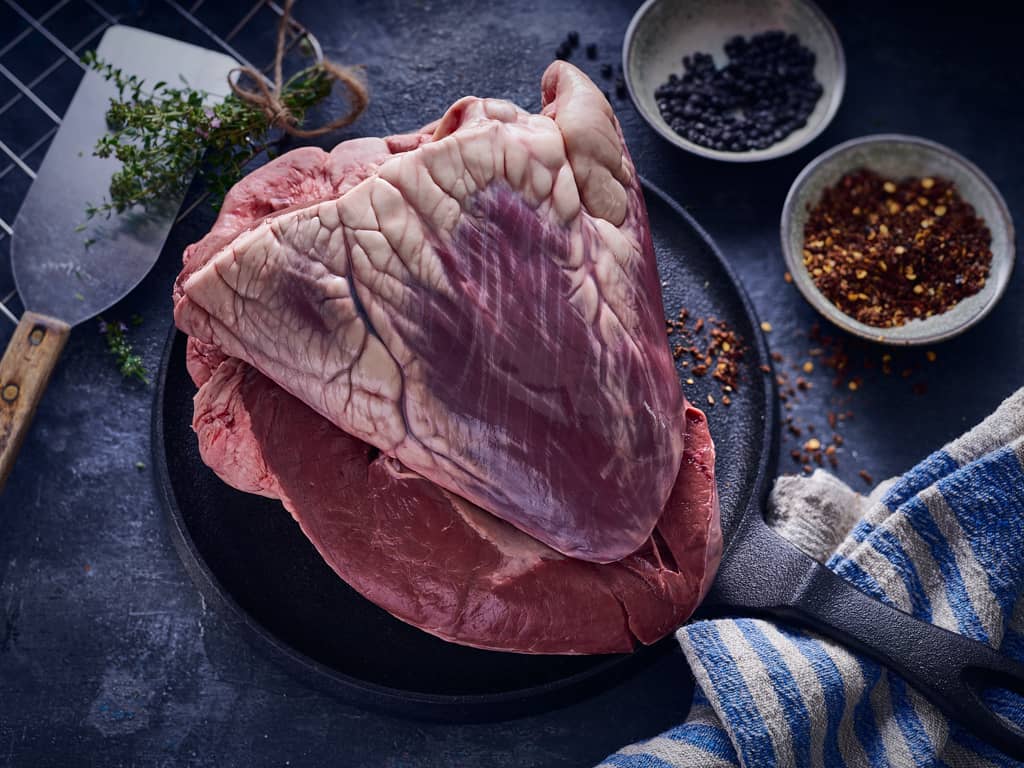
Heart
Cheeks
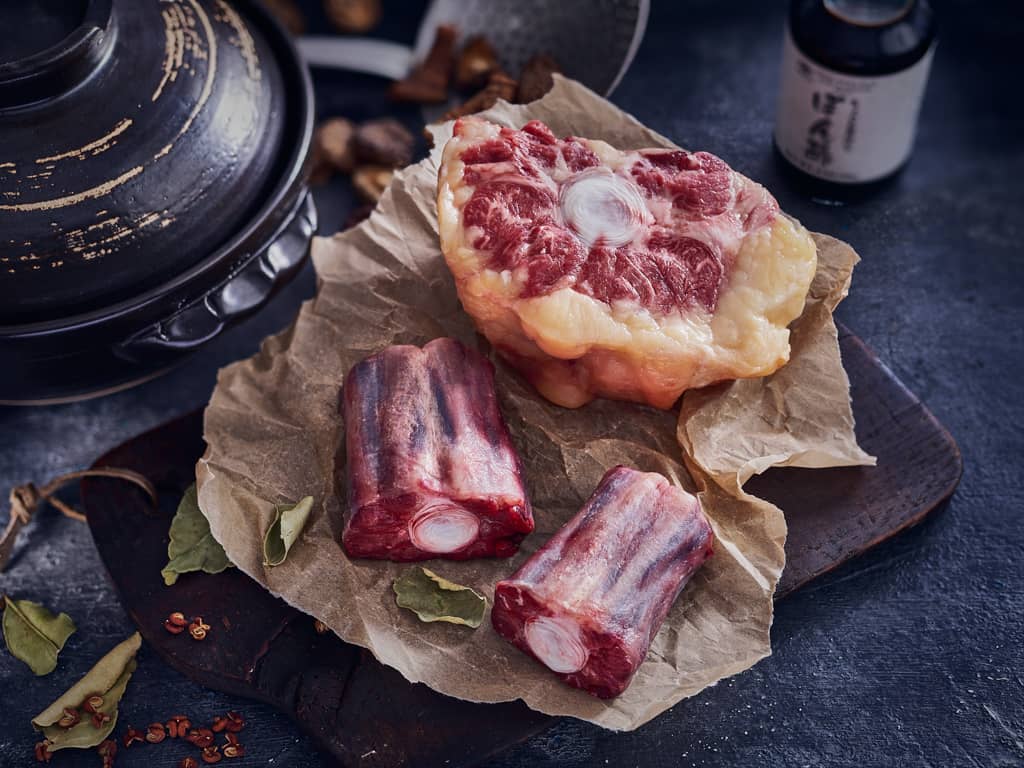
Oxtail
cold cuts
Sub-meso
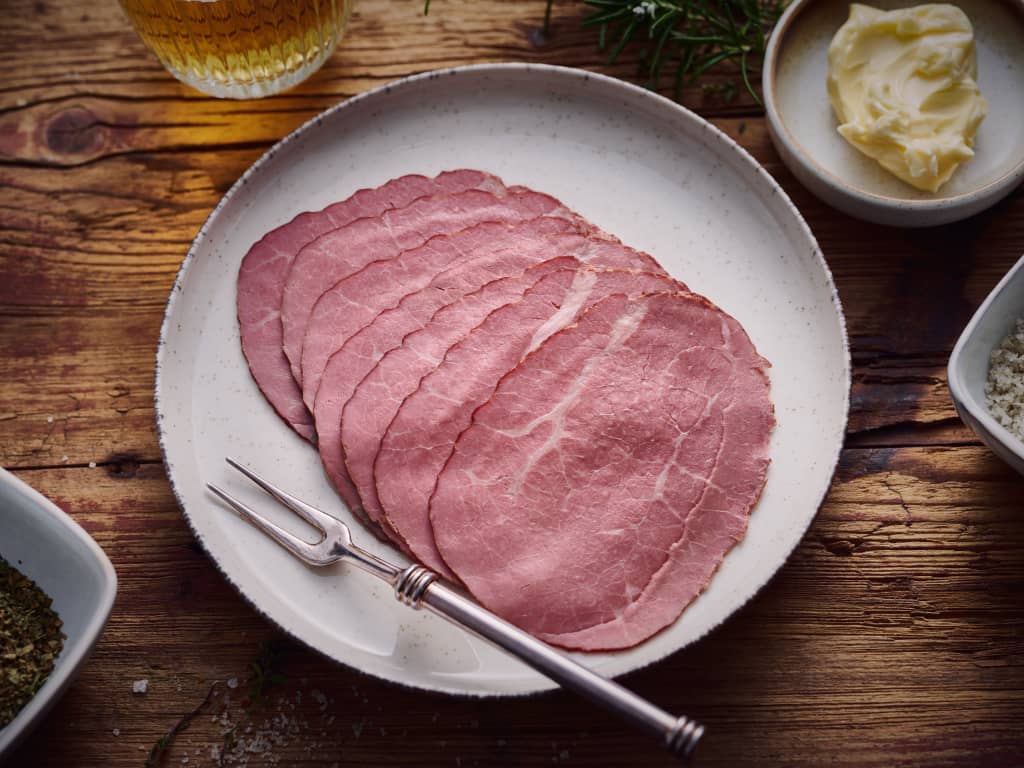
Pastrami
Pastrami is cured, spiced, and smoked beef. Tender, flavorful, and ideal for sandwiches or as cold cuts.
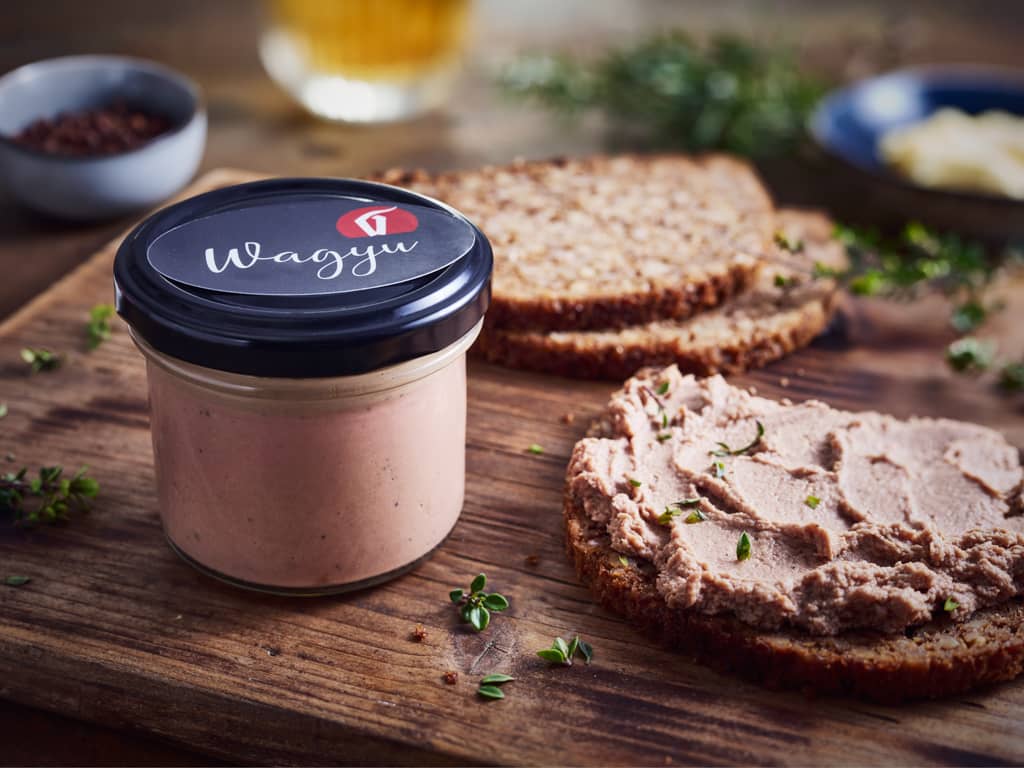
Liverwurst
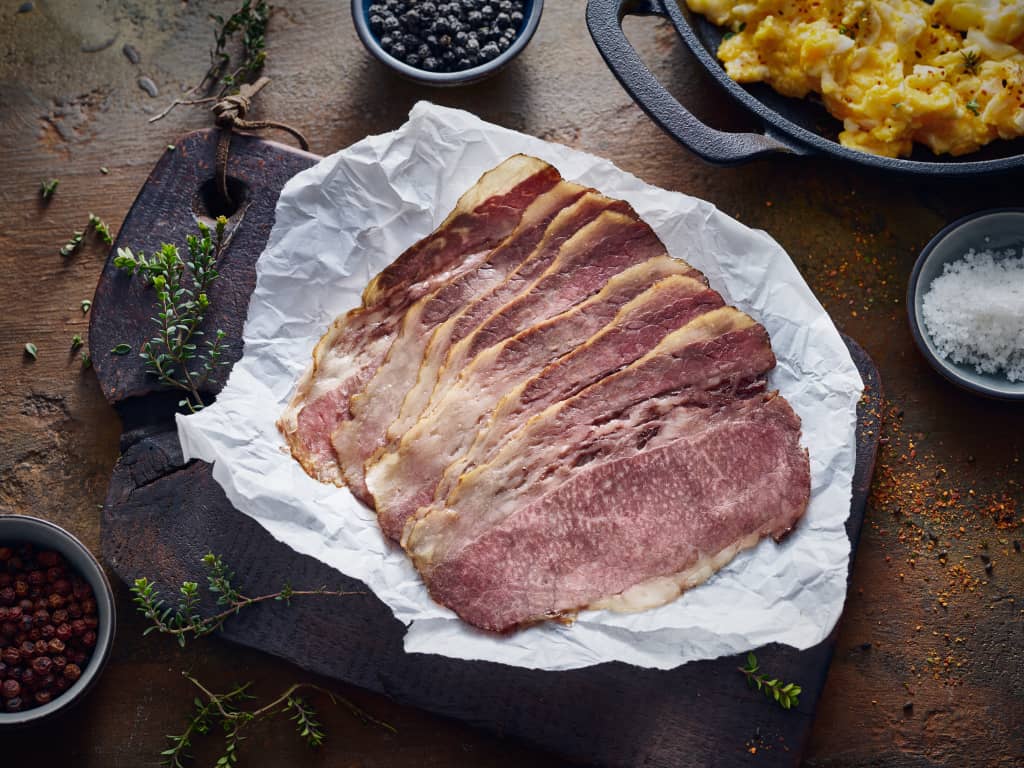
Bacon
Bacon impresses with its fine marbling and robust flavor. Perfect for frying or for enhancing dishes.
You can best cook the bacon in the Pan fry and to enjoy with a fried egg or also as bacon for the bacon-wrapped dates.
Fat
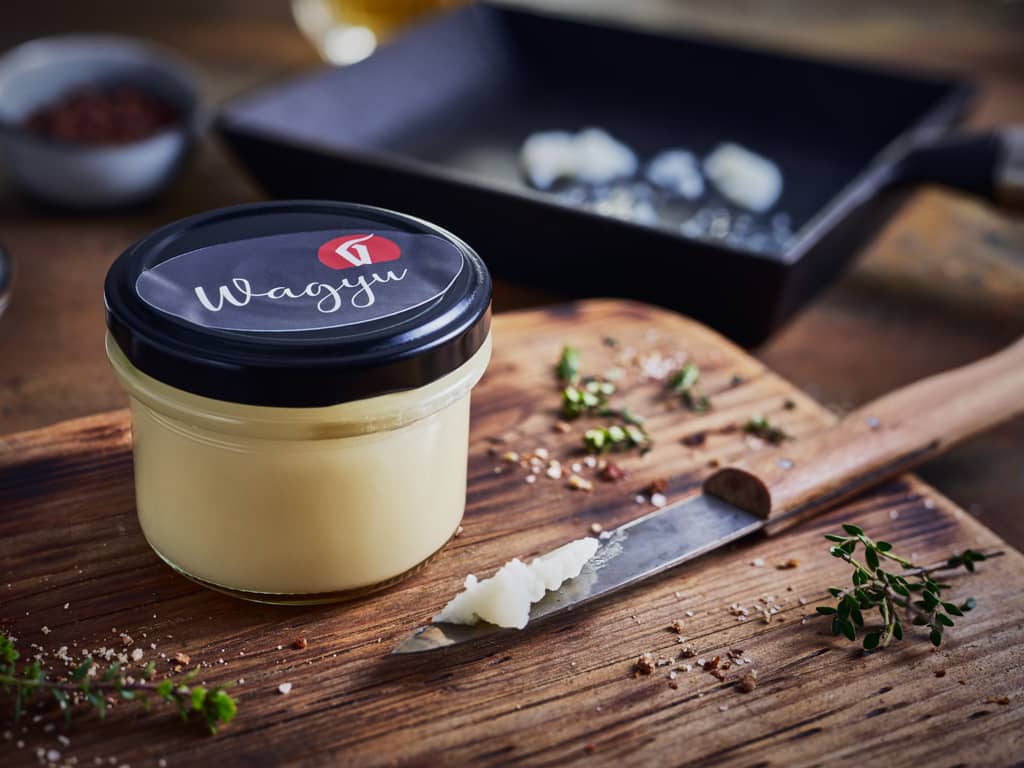
Extremely healthy and very delicious. This fat is particularly suitable for frying vegetables, home fries, and/or mashed potatoes. Of course, it also enhances „conventional“ meat.
Special pieces
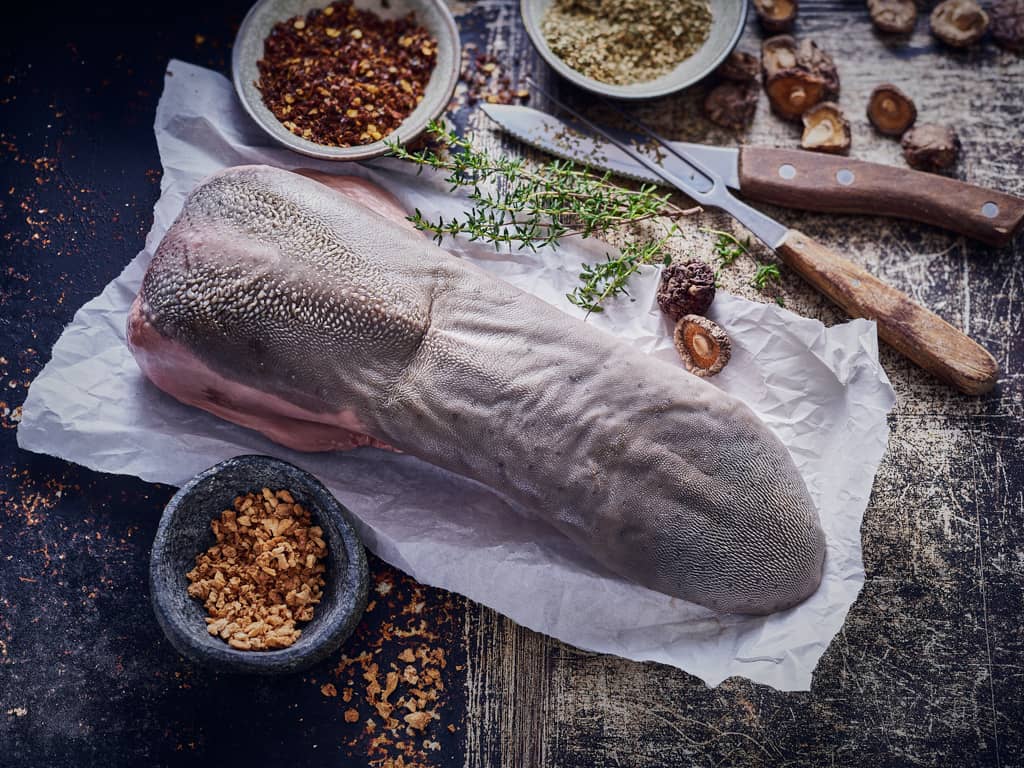
Tongue
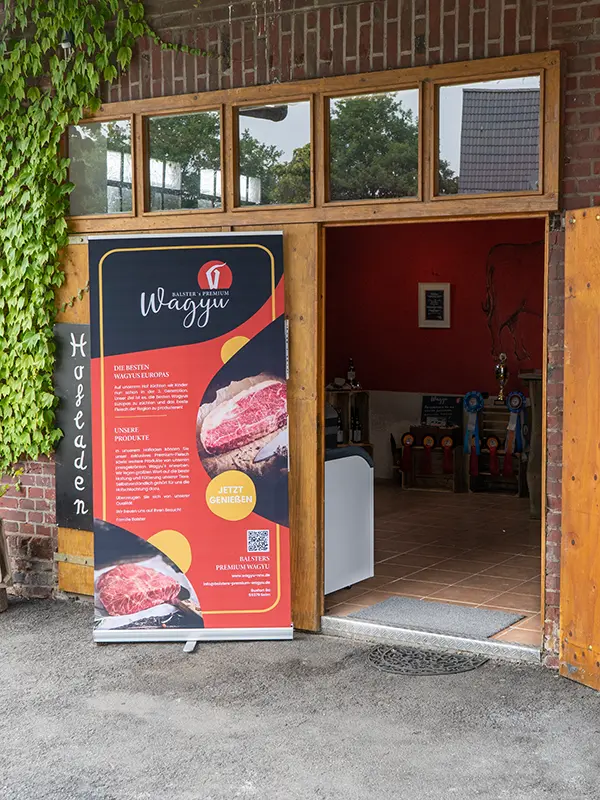
Try Wagyu steak, order online or buy directly on site
Connoisseurs and adventurous eaters are welcome to have our fresh, vacuum-packed Wagyu beef delivered directly to their homes using our online order form.
Otherwise, we are happy to advise you in our farm shop on our Wagyu steaks and how to prepare them.
Order sample packs
Order Wagyu beef